What Is APNIC?
A Simple Introduction to the Asia Pacific Network Information Centre
Table of Contents
ToggleWhen you browse the Internet, you probably don’t think much about the technical systems working in the background. But the truth is, there’s a lot happening to make sure websites load, emails send, and videos stream without a hitch. One of the organizations helping keep the Internet running smoothly, at least in this part of the world, is APNIC.
If you’ve never heard of APNIC before, don’t worry, you’re not alone. Let’s break it down in a simple way.
So, What Exactly Is APNIC?
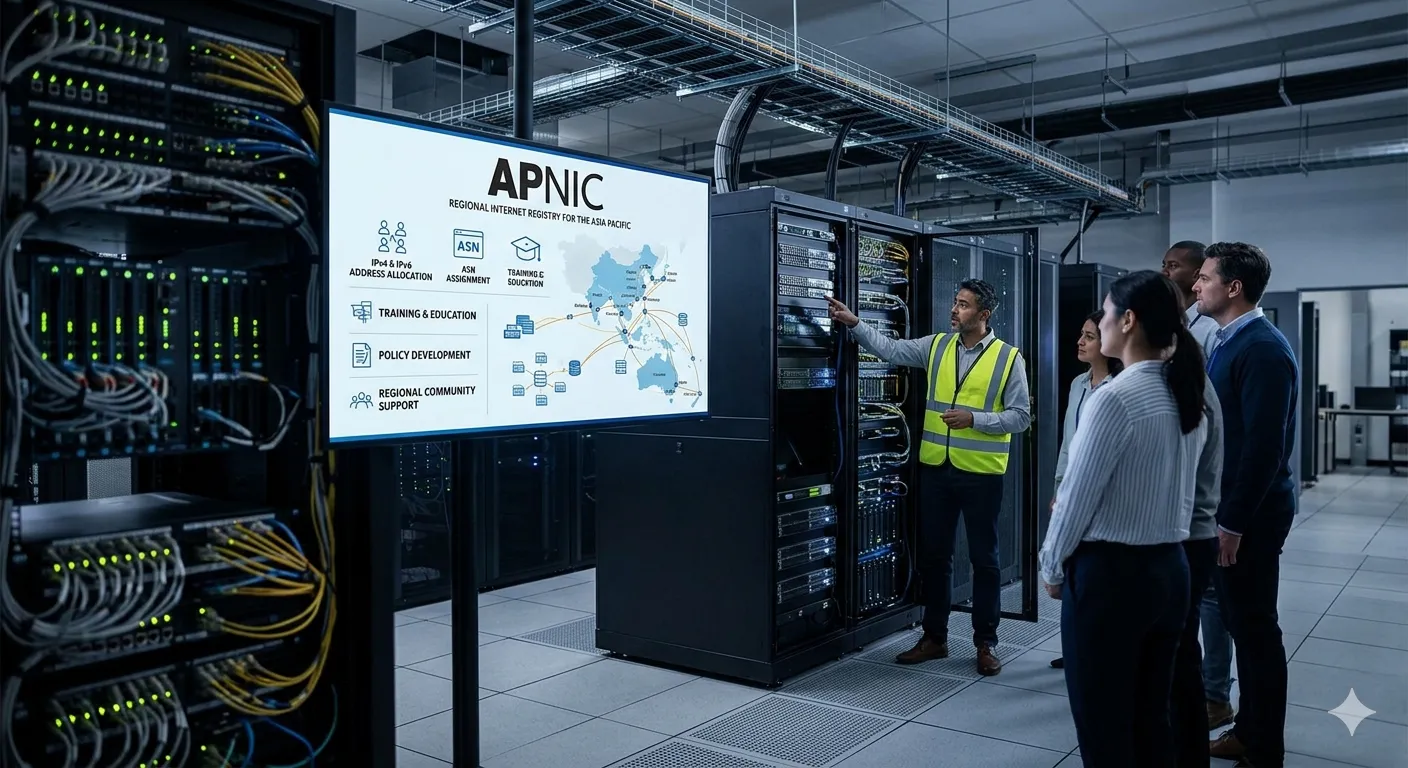
APNIC stands for Asia Pacific Network Information Centre. It’s an independent, non-profit organization that manages a critical part of the Internet: the IP addresses and Autonomous System Numbers (ASNs) for the Asia-Pacific region.
In other words, if you imagine the Internet as a giant city, APNIC is like the agency in charge of handing out street addresses, making sure everyone has a unique location and can be found easily. Without organizations like APNIC, the Internet would be chaotic — imagine trying to deliver mail in a city where hundreds of people had the same address!
APNIC officially started operations in 1993 and is based in Brisbane, Australia. Today, it serves 56 different economies, covering countries from Japan and Australia all the way to small Pacific Islands.
What Does APNIC Actually Do?
At its core, APNIC is responsible for:
- Allocating and registering IP addresses (both the old IPv4 and newer IPv6 types).
- Distributing ASNs, which help different networks talk to each other.
- Maintaining the public WHOIS database, where you can look up who holds a particular IP range.
- Providing training and support to help businesses, universities, and even governments manage their Internet networks better.
- Promoting Internet security practices, such as helping organizations use tools like RPKI to protect against cyberattacks.
But APNIC doesn’t work alone — it’s part of a bigger system. There are five Regional Internet Registries (RIRs) around the world, and APNIC covers the Asia-Pacific area.
Why Does APNIC Matter?
Without APNIC and organizations like it, the Internet would struggle to scale and stay secure. Here’s why it’s important:
- Fair Distribution: IP addresses are a limited resource. APNIC makes sure they’re given out fairly and according to need.
- Accountability: Thanks to APNIC’s records, it’s easier to track down issues like spam, hacking, or IP disputes.
- Supporting Growth: As more devices come online (especially with the rise of smart cities and IoT), APNIC helps plan for the future.
- Training and Knowledge Sharing: APNIC doesn’t just hand out resources; it teaches people how to use them responsibly and securely.
Who Can Join APNIC?
Membership is mainly for organizations that need their own IP addresses — such as Internet Service Providers, data centers, universities, and large enterprises. Members get access to services, support, and a say in how policies are shaped.
Even if you’re not a network engineer, you can still get involved by attending APNIC’s public conferences, joining discussions, or taking advantage of their free training programs.
Conclusion
The Internet feels like magic sometimes, but it runs on a lot of hard work, careful planning, and cooperation. APNIC plays a huge role in making sure everything stays connected and secure across one of the most diverse and dynamic regions on Earth.
Next time you load a website or send a message halfway across the globe, you’ll know a little more about the invisible network — and the people — making it all possible.
Trusted IPv4 Leasing for Business Growth
Get enterprise-grade IPv4 space quickly, with seamless deployment and end-to-end management.
Related Blogs
The IPv4 secondary market is often shrouded in mystery, leading many organizations to sit on valuable digital assets because they Read more
Buying IPv4 space requires policy compliance, verified need, and registry approval, making certified IP brokers essential guides through complex global Read more
Unlock the hidden value of unused IPv4 addresses with iLease, turning dormant digital infrastructure into a recurring revenue stream while Read more
The IPv4 secondary market is often shrouded in mystery, leading many organizations to sit on valuable digital assets because they Read more
Buying IPv4 space requires policy compliance, verified need, and registry approval, making certified IP brokers essential guides through complex global Read more
Unlock the hidden value of unused IPv4 addresses with iLease, turning dormant digital infrastructure into a recurring revenue stream while Read more