What Is an IP Address Risk Score
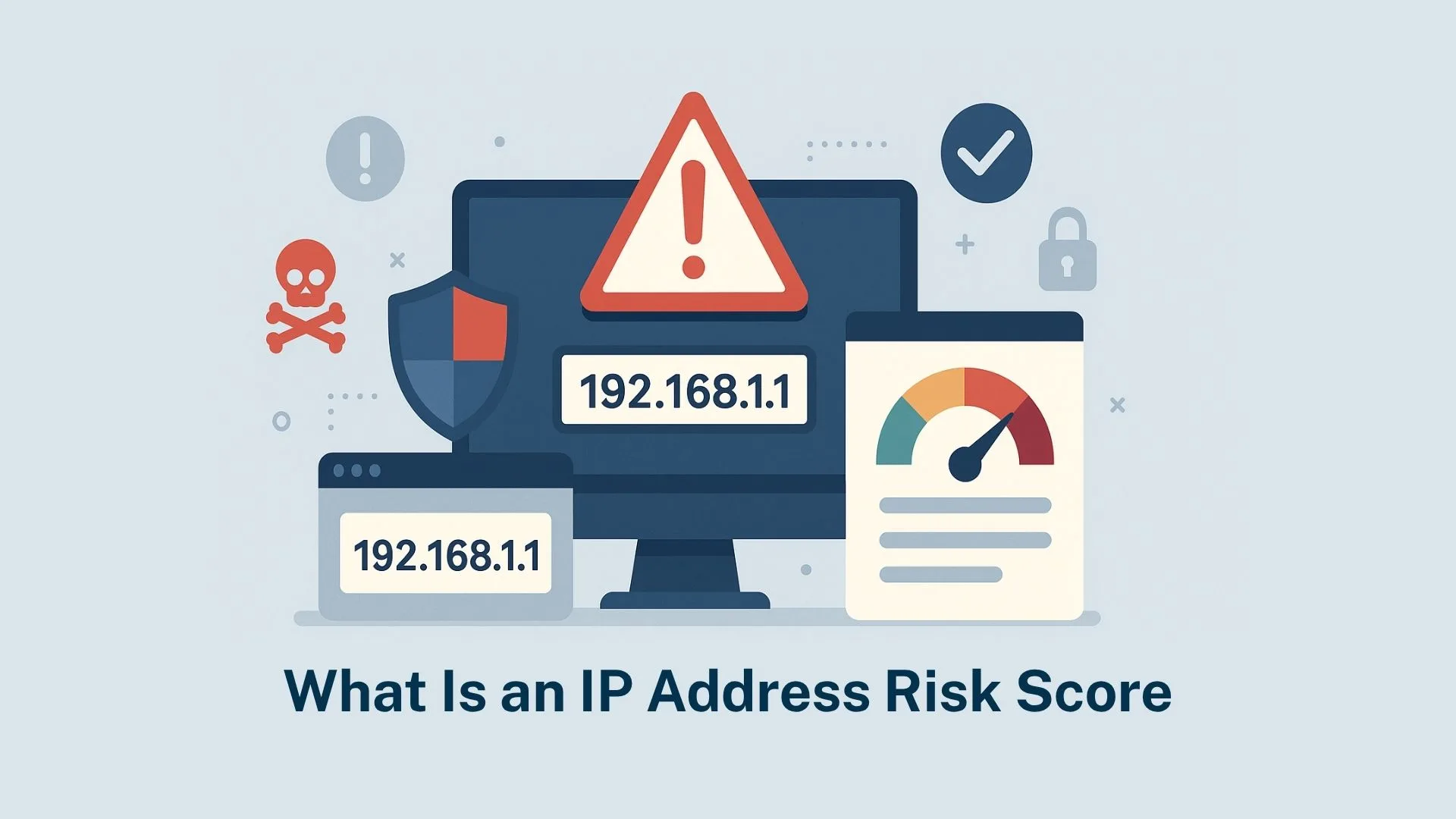
IP address risk scores help organisations assess potential threats. They detect malicious activity. They improve cybersecurity across networks. They strengthen protection for cloud systems.
Table of Contents
ToggleKey Points
IP risk scores turn risk into a number. This number shows how likely an IP address is linked to malicious behaviour. It also reflects chances of suspicious activity.
Organisations use IP risk scores in many ways. They block threats. They prioritise security alerts. They reduce the chance of cyberattacks.
Understanding IP Address Risk Scores
An IP address risk score is a numerical value. It is assigned to each IP address. This value tells the probability of the address being in malicious activity.
These scores come from multiple factors. One factor is the address’s historical behaviour. Reputation data matters too. Geolocation is another key point. Connections to known threat actors also influence the score.
From my experience in cybersecurity, an IP address risk score is a critical metric that quantifies the probability of an IP being involved in malicious activity. These scores are calculated using historical behavior, reputation data, geolocation, and known threat actor associations. Understanding and leveraging IP risk scores allows security teams to make informed, proactive decisions to protect their networks."
— Dr. Emily Chen, Cybersecurity Analyst
Many groups rely on these scores. Internet service providers (ISPs) use them. Data centres find them useful. Cloud service providers depend on them. Enterprise security teams use them to assess risk right away.
How IP Address Risk Scores Are Calculated
IP risk scoring uses several elements together. These elements work as a combination.
Threat intelligence feeds are important. These are databases. They track IPs used in malware campaigns. They also follow IPs linked to phishing. Botnet activity IPs are recorded too.
Geolocation analysis plays a role. Unusual locations can affect the score. High-risk locations also influence it.
Historical activity is a key factor. Previous malicious behaviour raises risk. Repeated suspicious connections also push the risk level up.
Connection patterns matter as well. IPs with unusual traffic volumes may be a red flag. Scanning behaviour can indicate automated attacks.
Scores usually go from low to high. Often, they use a 0–100 scale. Sometimes, they are put into brackets. Common brackets are “safe,” “suspicious,” and “malicious.”
Why IP Risk Scores Matter for Cybersecurity
IP risk scores give organisations useful insights. These insights help reduce exposure to cyber threats. The scores are built into various systems.
Firewalls use them. Intrusion detection systems integrate them. Cloud security platforms rely on them. They block high-risk traffic. They also flag suspicious activity.
"IP risk scores are a cornerstone of modern cybersecurity. By quantifying the likelihood that an IP address is involved in malicious activity, these scores provide organizations with actionable insights to reduce exposure to threats. Integrated into firewalls, intrusion detection systems, and cloud security platforms, IP risk scores help block high-risk traffic and flag suspicious behavior before it can impact critical systems."
— Dr. Michael Tan, Senior Cybersecurity Strategist
Applications Across Industries
ISPs and cloud providers use these scores. They protect users from malware. They block spam. They defend against DDoS attacks.
E-commerce and financial services benefit too. They screen high-risk IP addresses. This prevents fraud. It stops unauthorised access.
Enterprise networks use the scores effectively. They detect insider threats. They spot lateral movement within corporate networks.
Benefits of Implementing IP Risk Scores
False positives are reduced. Security teams focus on real threats. They don’t waste time on benign traffic.
Threats are mitigated proactively. Early detection stops large-scale attacks from happening.
Compliance is enhanced. Organisations meet regulatory requirements. These requirements cover cybersecurity. They also include data protection.
Limitations and Considerations
IP risk scores are useful. But they are not perfect. IP addresses can be spoofed. Attackers may change addresses to avoid detection.
Risk scoring needs other security measures. Behavioural analytics is one. User authentication is another. Endpoint monitoring is also necessary.
Future Trends in IP Risk Scoring
New AI and machine learning tools are emerging. They improve the accuracy of IP risk assessments. Predictive models are a key part.
These models can identify threats early. They spot risks before they occur. This enables dynamic scoring in real time.
Integration with threat-hunting platforms helps. Security teams can automate responses. These responses target high-risk traffic.
Trusted IPv4 Leasing for Business Growth
Get enterprise-grade IPv4 space quickly, with seamless deployment and end-to-end management.
FAQs
It is a numerical value. It assesses the likelihood of an IP address being in malicious activity. It also checks for suspicious activity.
ISPs use them. Cloud providers rely on them. Enterprises and cybersecurity teams use them too. They manage threat exposure with these scores.
It is calculated by analysing multiple factors. Threat intelligence is one factor. Historical activity is another. Geolocation and unusual connection patterns are also considered.
They cannot prevent attacks by themselves. But they help security teams identify risks. They enable proactive mitigation.
No, they are not. Scores are an estimation. They should be combined with other security tools and measures.
Related Blogs
Buying IPv4 addresses outside proper IP Allocation channels exposes organisations to fraud, legal disputes, operational failures and long-term governance risks.Key Read more
Facing IPv4 shortages, companies must weigh cost, speed, and network growth when choosing a lease plan.Short-term leasing lets you scale Read more
IPv4 地址曾经只是互联网运行所需的基础资源。但在今天,它越来越像一种具有市场价格、可交易、可租赁的数字资产。造成这一变化的原因并不复杂:IPv4 的总量有限,而全球互联网对 IPv4 的需求并没有消失;与此同时,IPv6 虽然早已出现,但迁移进度依然缓慢。这三股力量叠加,正在重新塑造运营商对 IP 地址的看法,也改变了互联网基础设施的经济逻辑。原文将这点概括为“有限供给、持续需求与缓慢转型”,并指出这正在推动 IP 地址成为影响全球电信经济的可交易资产。 IPv4 稀缺并不是新问题 全球互联网至今仍大量依赖 IPv4。这个协议诞生于更早的时代,只能提供大约 43 亿个地址。这个数量在互联网初期似乎足够庞大,但在今天已经明显不够。原文指出,IANA 在 2011 年就已将最后一批大型 IPv4 Read more
Buying IPv4 addresses outside proper IP Allocation channels exposes organisations to fraud, legal disputes, operational failures and long-term governance risks.Key Read more
Facing IPv4 shortages, companies must weigh cost, speed, and network growth when choosing a lease plan.Short-term leasing lets you scale Read more
IPv4 地址曾经只是互联网运行所需的基础资源。但在今天,它越来越像一种具有市场价格、可交易、可租赁的数字资产。造成这一变化的原因并不复杂:IPv4 的总量有限,而全球互联网对 IPv4 的需求并没有消失;与此同时,IPv6 虽然早已出现,但迁移进度依然缓慢。这三股力量叠加,正在重新塑造运营商对 IP 地址的看法,也改变了互联网基础设施的经济逻辑。原文将这点概括为“有限供给、持续需求与缓慢转型”,并指出这正在推动 IP 地址成为影响全球电信经济的可交易资产。 IPv4 稀缺并不是新问题 全球互联网至今仍大量依赖 IPv4。这个协议诞生于更早的时代,只能提供大约 43 亿个地址。这个数量在互联网初期似乎足够庞大,但在今天已经明显不够。原文指出,IANA 在 2011 年就已将最后一批大型 IPv4 Read more