IPv6 Adoption Challenges: Solutions for Seamless Transition
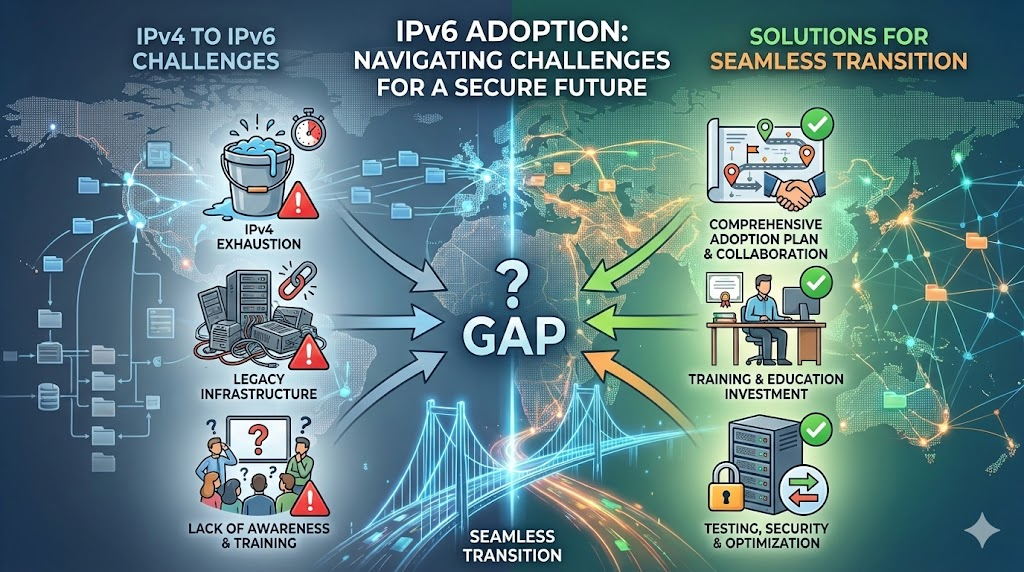
In the rapidly evolving landscape of internet technology, the transition from IPv4 to IPv6 has become an increasingly pressing concern for organizations worldwide. While IPv6 offers numerous advantages over its predecessor, including a vastly expanded address space and enhanced security features, its adoption presents unique challenges and complexities. In this article, we will explore the key challenges associated with IPv6 adoption and provide practical solutions for overcoming them.
Table of Contents
ToggleUnderstanding the Five (5) IPv6 Adoption Challenges:
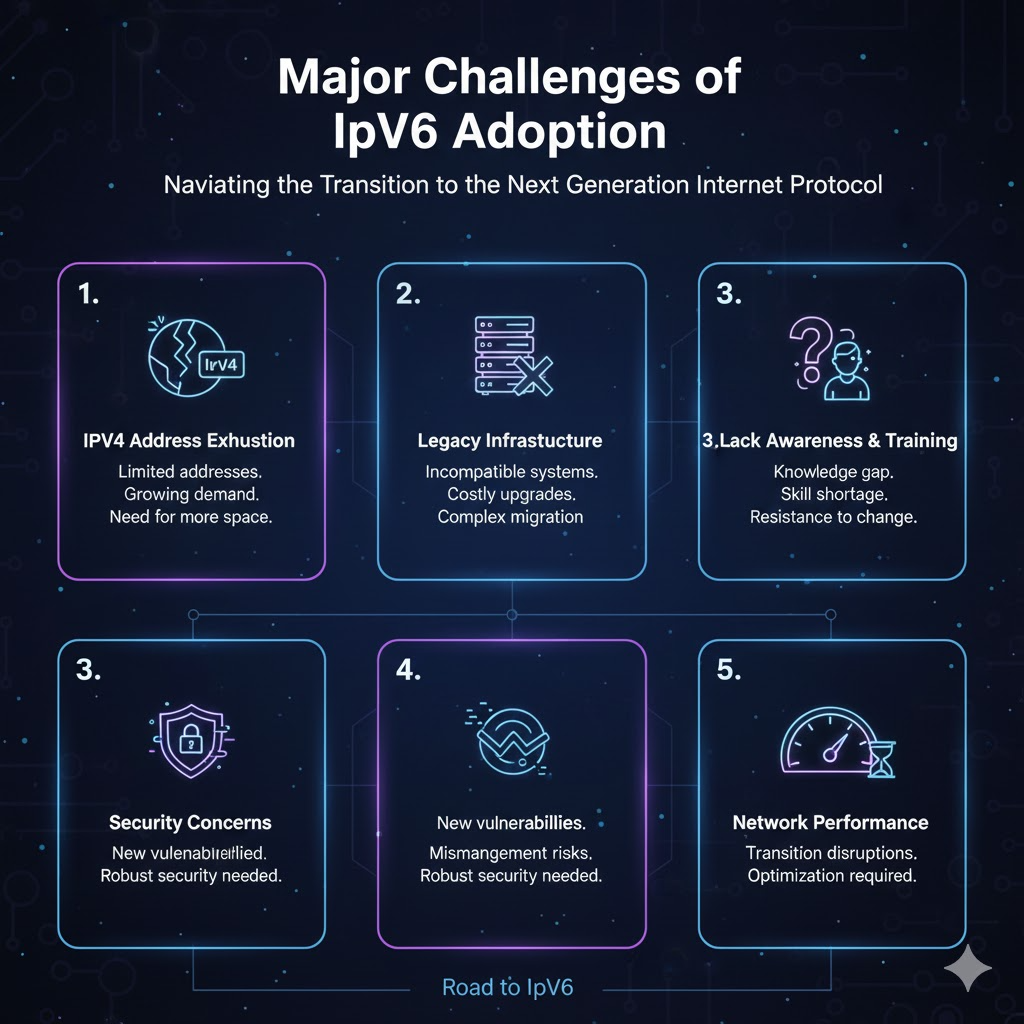
1. IPv4 address exhaustion:
One of the primary drivers behind the transition to IPv6 is the imminent exhaustion of available IPv4 addresses. With the proliferation of internet-connected devices and the growing demand for IP addresses, IPv4’s limited address space has become increasingly strained, necessitating the adoption of IPv6 to accommodate future growth.
2. Legacy Infrastructure Compatibility:
Many organizations rely on legacy networking infrastructure and applications that are not inherently compatible with IPv6. Migrating these systems to IPv6 can be a complex and time-consuming process, requiring thorough testing and potentially costly upgrades or replacements.
3. Lack of Awareness and Training
Despite the importance of IPv6 adoption, many IT professionals and organizations lack awareness of its benefits and technical intricacies. A lack of training and expertise in IPv6 implementation can hinder adoption efforts and contribute to resistance or skepticism among stakeholders.
4. Security Concerns:
While IPv6 offers built-in security features such as IPsec integration and address autoconfiguration, its adoption can introduce new security risks and vulnerabilities if not properly managed. Organizations must implement robust security measures and protocols to mitigate the potential risks associated with IPv6 deployment.
5. Network Performance and Optimization:
Transitioning to IPv6 may impact network performance and efficiency, particularly during the coexistence period when both IPv4 and IPv6 protocols are in use. Proper planning and optimization strategies are essential to minimize disruptions and ensure optimal performance throughout the transition process.
Strategies for Overcoming IPv6 Adoption Challenges:
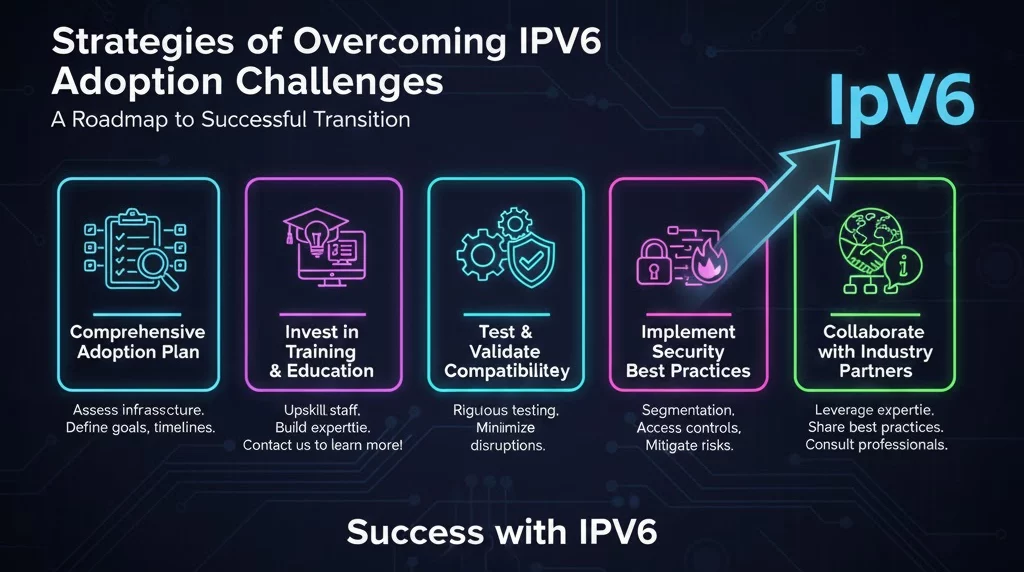
1. Develop a comprehensive adoption plan:
Start by conducting a thorough assessment of your organization’s current network infrastructure, applications, and resources. Develop a detailed adoption plan that outlines specific goals, timelines, and milestones for migrating to IPv6.
2. Invest in IPv6 training and education.
Provide comprehensive training and education for your IT staff and stakeholders to increase awareness and understanding of IPv6 technology and its implementation. Encourage ongoing learning and skill development to ensure a smooth transition. For IPv6 education, contact us to learn more!
3. Test and validate compatibility:
Prior to deployment, conduct rigorous testing and validation of IPv6 compatibility with existing systems, applications, and devices. Identify and address any compatibility issues or interoperability challenges to minimize disruptions during the transition process.
4. Implement security best practices:
Prioritize security throughout the IPv6 adoption process by implementing best practices such as network segmentation, access controls, encryption, and intrusion detection systems. Stay informed about emerging threats and vulnerabilities related to IPv6 and proactively address them to mitigate risks.
5. Collaborate with industry partners:
Engage with industry partners, vendors, and service providers to leverage their expertise and resources in IPv6 adoption. Collaborate on interoperability testing, share best practices, and seek guidance from experienced IP address professionals like Larus‘s officers to facilitate a successful transition.
IPv6 adoption, in a nutshell
While IPv6 adoption presents numerous challenges, proactive planning, education, and collaboration can help organizations overcome these obstacles and reap the benefits of a modern, scalable, and secure internet infrastructure. By addressing key challenges and implementing best practices, organizations can navigate the transition to IPv6 with confidence and ensure a seamless transition to the next generation of internet technology.
Trusted IPv4 Leasing for Business Growth
Get enterprise-grade IPv4 space quickly, with seamless deployment and end-to-end management.
FAQs
The primary reason is backward compatibility. IPv6 is not directly compatible with IPv4. This means organizations cannot simply “switch” overnight; they must run both protocols simultaneously (Dual-Stack) or use translation mechanisms (NAT64), which is costly and technically complex for legacy infrastructure.
Theoretically, yes, because IPsec (Internet Protocol Security) is built into the IPv6 protocol standard, whereas it is an add-on for IPv4. However, during the transition phase, security risks can actually increase if IT teams are not properly trained, as they may fail to configure firewalls for IPv6 traffic, leaving “backdoors” open.
Eventually, yes, but not for many years. Because so much of the global internet infrastructure relies on IPv4, it will likely exist alongside IPv6 for decades. This “co-existence” period drives the continued demand for IPv4 leasing to support legacy systems while new networks are built on IPv6.
Buying IPv4 addresses outside proper IP Allocation channels exposes organisations to fraud, legal disputes, operational failures and long-term governance risks.Key Read more
Facing IPv4 shortages, companies must weigh cost, speed, and network growth when choosing a lease plan.Short-term leasing lets you scale Read more
IPv4 地址曾经只是互联网运行所需的基础资源。但在今天,它越来越像一种具有市场价格、可交易、可租赁的数字资产。造成这一变化的原因并不复杂:IPv4 的总量有限,而全球互联网对 IPv4 的需求并没有消失;与此同时,IPv6 虽然早已出现,但迁移进度依然缓慢。这三股力量叠加,正在重新塑造运营商对 IP 地址的看法,也改变了互联网基础设施的经济逻辑。原文将这点概括为“有限供给、持续需求与缓慢转型”,并指出这正在推动 IP 地址成为影响全球电信经济的可交易资产。 IPv4 稀缺并不是新问题 全球互联网至今仍大量依赖 IPv4。这个协议诞生于更早的时代,只能提供大约 43 亿个地址。这个数量在互联网初期似乎足够庞大,但在今天已经明显不够。原文指出,IANA 在 2011 年就已将最后一批大型 IPv4 Read more