What is the Domain Name System, the DNS?
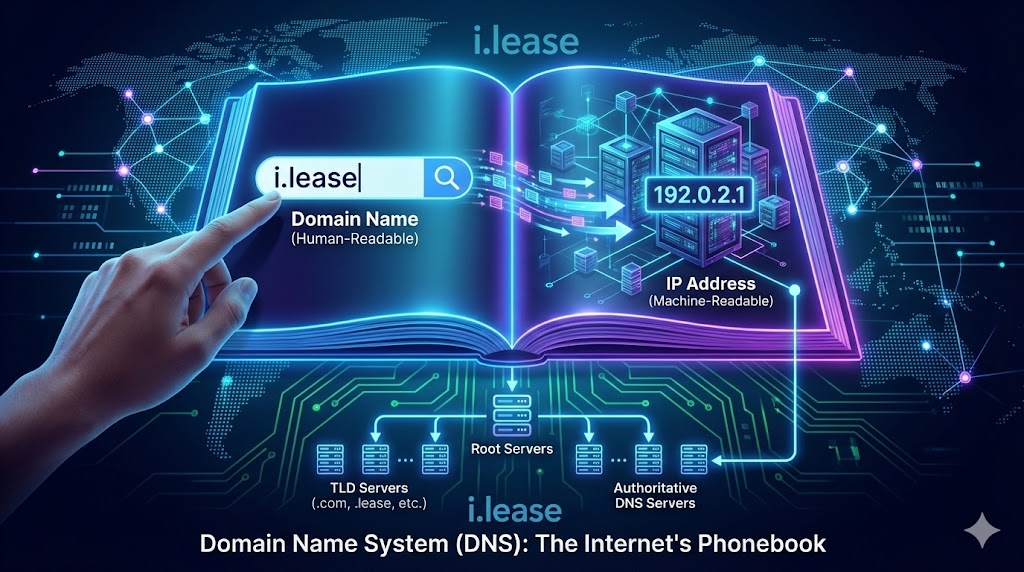
The Domain Name System (DNS) stands as a fundamental component that underpins seamless communication and accessibility across digital networks. While users navigate the internet using familiar domain names, such as google.com or facebook.com, behind the scenes, DNS quietly performs the vital task of translating these human-readable domain names into machine-readable IP addresses, facilitating the flow of data packets across the global network. Let’s unravel what DNS is and explore its role in enabling the World Wide Web.
Table of Contents
ToggleRoles of DNS: Translating Domain Names to IP Addresses
DNS serves as a distributed directory system that maps domain names to their corresponding IP addresses, allowing users to access websites, send emails, and communicate across the internet using familiar and meaningful identifiers.
This process, known as DNS resolution, involves a hierarchical structure of DNS servers, each responsible for a specific domain or zone, collectively forming the DNS hierarchy. When a user enters a domain name into a web browser or other network-enabled application, the DNS resolver queries the DNS infrastructure to obtain the corresponding IP address, enabling seamless connectivity and accessibility to online resources.
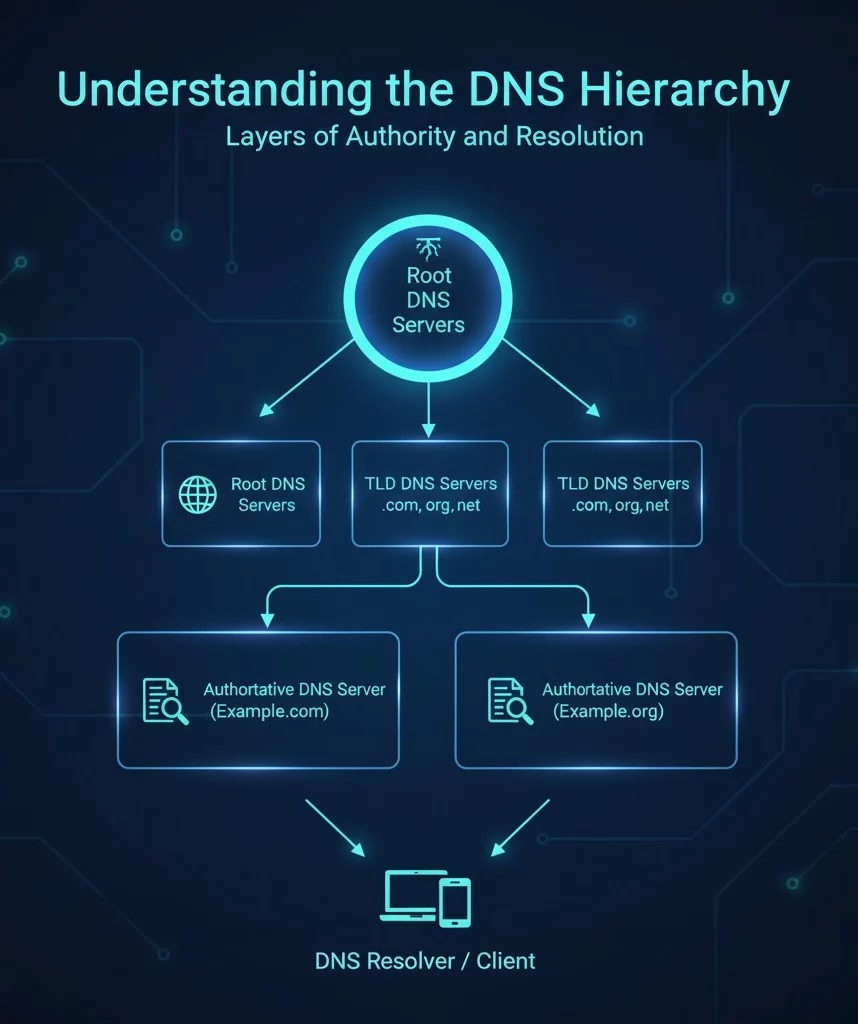
Understanding the DNS Hierarchy: Layers of Authority and Resolution
The DNS hierarchy consists of multiple layers of authority and resolution, each serving a specific role in the process of domain name resolution. At the top of the hierarchy are the root DNS servers, which maintain the authoritative records for the root zone of the DNS namespace. Underneath the root servers are the top-level domain (TLD) servers, responsible for managing domain names within specific TLDs such as .com, .org, or .net. Further down the hierarchy are the authoritative DNS servers, which maintain authoritative records for individual domain names or zones, providing resolution services to DNS resolvers and clients.
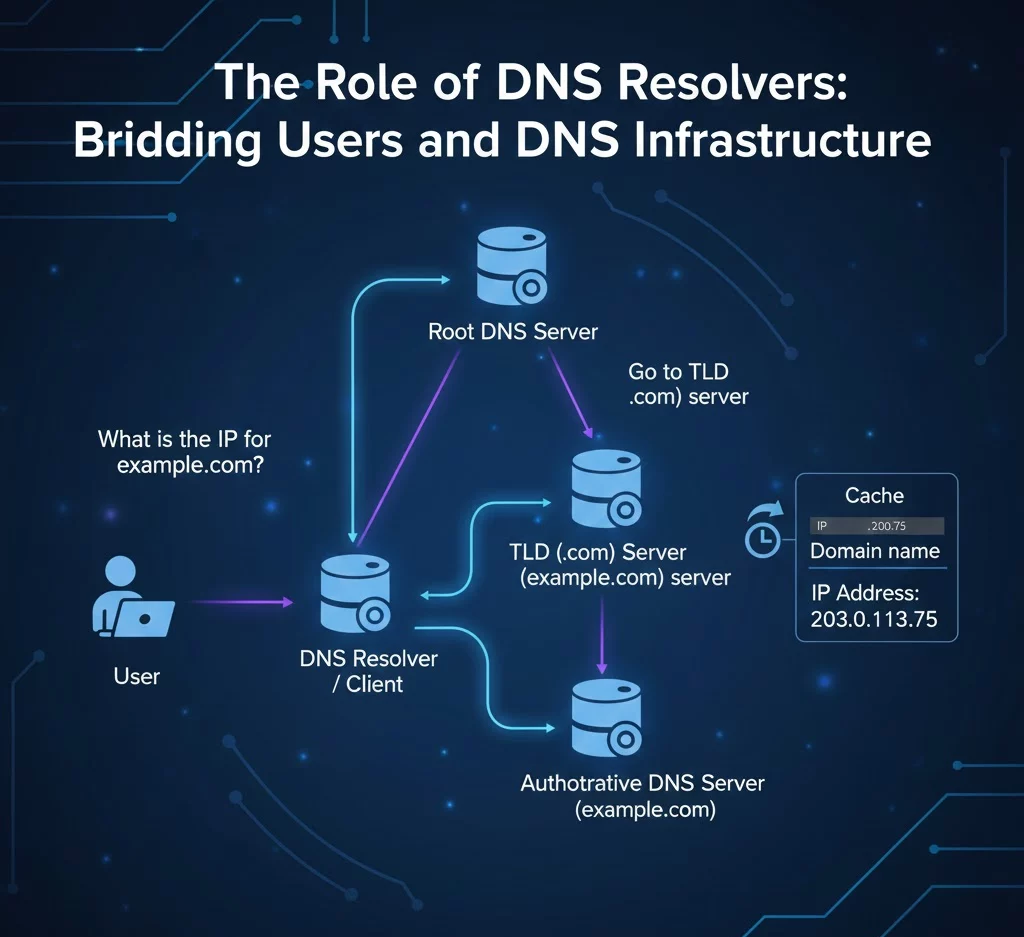
The Role of DNS Resolvers: Bridging Users and DNS Infrastructure
DNS resolvers, also known as recursive resolvers, play a crucial role in the DNS resolution process by acting as intermediaries between users and the DNS infrastructure. When a user initiates a DNS query by entering a domain name into a web browser, the resolver begins the resolution process by querying the root DNS servers to obtain the authoritative servers responsible for the requested domain.
Through iterative queries, the resolver traverses the DNS hierarchy, resolving domain names and obtaining the corresponding IP addresses until it reaches the authoritative server for the requested domain. Once the IP address is obtained, the resolver caches the result for future use, optimizing performance and reducing latency for subsequent queries.
DNS Security and Resilience: Mitigating Threats and Ensuring Reliability
In addition to facilitating domain name resolution, DNS plays a crucial role in ensuring the security and resilience of Internet communication. DNS security mechanisms, such as Domain Name System Security Extensions (DNSSEC), provide cryptographic authentication and integrity verification for DNS responses, mitigating the risk of DNS spoofing, cache poisoning, and other malicious attacks. Moreover, DNS employs redundancy and fault tolerance mechanisms, such as Anycast routing and DNS-based load balancing, to ensure the reliability and availability of DNS services, even in the face of network disruptions or targeted attacks.
Conclusion: Domain Name System's Functions in Internet Communication
In conclusion, the Domain Name System (DNS) serves as a cornerstone of Internet communication, enabling users to navigate the web using familiar domain names and facilitating seamless connectivity and accessibility across digital networks. Through its hierarchical structure, resolution process, and security mechanisms, DNS ensures the reliable and efficient translation of domain names to IP addresses, empowering individuals, businesses, and communities to harness the full potential of the interconnected world of cyberspace. As the internet continues to evolve and expand, the role of DNS remains indispensable, driving innovation and connectivity in the digital age.
Trusted IPv4 Leasing for Business Growth
Get enterprise-grade IPv4 space quickly, with seamless deployment and end-to-end management.
FAQs
Yes, potentially. While DNS doesn’t increase your bandwidth (download speed), switching to a fast public DNS like Google (8.8.8.8) or Cloudflare (1.1.1.1) can resolve domain names faster than your ISP’s default server. This makes websites start loading sooner, making your browsing experience feel snappier.
-
Recursive Resolver: The “middleman” (usually your ISP) that goes out and finds the IP address for you.
-
Authoritative Server: The “final source of truth” that actually holds the specific IP record for a domain (e.g., the server holding the record for
google.com).
A DNS leak happens when you are using a VPN to hide your location, but your computer accidentally sends DNS requests through your normal ISP instead of the VPN tunnel. This reveals your browsing history to your ISP, defeating the purpose of the VPN.
Buying IPv4 addresses outside proper IP Allocation channels exposes organisations to fraud, legal disputes, operational failures and long-term governance risks.Key Read more
Facing IPv4 shortages, companies must weigh cost, speed, and network growth when choosing a lease plan.Short-term leasing lets you scale Read more
IPv4 地址曾经只是互联网运行所需的基础资源。但在今天,它越来越像一种具有市场价格、可交易、可租赁的数字资产。造成这一变化的原因并不复杂:IPv4 的总量有限,而全球互联网对 IPv4 的需求并没有消失;与此同时,IPv6 虽然早已出现,但迁移进度依然缓慢。这三股力量叠加,正在重新塑造运营商对 IP 地址的看法,也改变了互联网基础设施的经济逻辑。原文将这点概括为“有限供给、持续需求与缓慢转型”,并指出这正在推动 IP 地址成为影响全球电信经济的可交易资产。 IPv4 稀缺并不是新问题 全球互联网至今仍大量依赖 IPv4。这个协议诞生于更早的时代,只能提供大约 43 亿个地址。这个数量在互联网初期似乎足够庞大,但在今天已经明显不够。原文指出,IANA 在 2011 年就已将最后一批大型 IPv4 Read more