What Is an Autonomous System Number (ASN)? A Business Guide to Internet Routing

An Autonomous System Number (ASN) is one of the most important building blocks of the Internet, yet it is often overlooked outside networking teams. Businesses planning cloud deployments, operating data centres, running Internet Service Providers (ISPs), providing VPN services, or managing their own public IPv4 resources will eventually encounter ASNs as part of Internet routing.
Table of Contents
ToggleWhile an IPv4 address identifies where Internet traffic should be delivered, an ASN identifies the network responsible for advertising that address space to the global Internet. The two work together but serve different purposes. One provides reachability, while the other provides routing identity.
This distinction becomes increasingly important as organisations expand their infrastructure across multiple providers, deploy redundant Internet connections, or begin using Bring Your Own IP (BYOIP) strategies. In these situations, simply owning or leasing IPv4 addresses is often not enough. Businesses may also need an ASN and the ability to participate in Border Gateway Protocol (BGP) routing.
For many organisations, leasing IPv4 addresses remains the simplest way to expand public address capacity. As routing requirements become more advanced, an ASN can provide greater control over how those addresses are announced across the Internet.
This guide explains what an ASN is, how it works, why businesses need one, and how it relates to IPv4 leasing and Internet routing.
ASN in simple business terms
Businesses often understand IPv4 addresses because they are assigned to servers, firewalls, VPN gateways, websites, or cloud workloads.
An ASN is different.
Rather than identifying a single server, it identifies the organisation operating a routing policy.
This allows Internet routers around the world to recognise:
- Which organisation owns the routing policy
- Which IP prefixes are being advertised
- Which paths are available to reach those prefixes
- How traffic should move between independent networks
Without ASNs, global Internet routing between thousands of independent networks would be extremely difficult to manage.
Who typically has an ASN?
Many different organisations operate their own Autonomous Systems, including:
- Internet Service Providers (ISPs)
- Cloud providers
- Data centre operators
- Content Delivery Networks (CDNs)
- Universities
- Government agencies
- Financial institutions
- Large enterprises
- Telecommunications companies
- Managed network providers
These organisations often manage multiple Internet connections and advertise their own IPv4 or IPv6 prefixes using BGP.
What Is an Autonomous System?
Before understanding an Autonomous System Number, it helps to understand what an Autonomous System (AS) actually is.
An Autonomous System is a collection of IP networks operated by a single organisation under one common routing policy.
Instead of treating every router on the Internet individually, the Internet groups networks into Autonomous Systems.
Each Autonomous System becomes one identifiable participant in global Internet routing.
For example, an Internet Service Provider may operate hundreds of routers across multiple cities. Although those routers are physically separate, they all belong to the same Autonomous System because they follow one routing policy managed by the provider.
The same concept applies to cloud providers, multinational enterprises, universities, and large hosting companies.
Every Autonomous System has its own identity
Just as every company has a registration number, every Autonomous System participating in global Internet routing receives its own ASN.
That ASN allows routers worldwide to recognise:
- Which network is advertising an IP prefix
- Where routing information originated
- How traffic should flow between networks
- Alternative routing paths if one connection becomes unavailable
Autonomous does not mean isolated
The word “autonomous” sometimes causes confusion.
It does not mean disconnected from the Internet.
Instead, it means the organisation controls its own routing decisions.
For example, a business operating its own ASN can decide:
- Which Internet providers to connect to
- Which routes should be preferred
- Which backup routes should be used during failures
- How traffic enters and leaves its network
This level of routing independence is one reason larger organisations obtain their own ASN as they expand their infrastructure.
Real-world examples
Many well-known Internet companies operate their own Autonomous Systems.
Cloud providers, telecommunications companies, content delivery networks, social media platforms, search engines, and streaming services all announce their own networks through one or more ASNs.
Even large enterprises increasingly operate their own Autonomous Systems to support hybrid cloud environments, multiple Internet providers, disaster recovery planning, and international connectivity.
Key takeaway
An IPv4 address tells the Internet where a service is located.
An Autonomous System tells the Internet who is responsible for advertising that route.
Together with BGP, these two components form the foundation of global Internet routing.
Why Does an ASN Exist?
The Internet is not operated by a single company or government. Instead, it is made up of tens of thousands of independently managed networks that exchange traffic with one another every second.
Without a common routing system, these networks would have no reliable way to determine who is responsible for a particular IP address block or how traffic should travel across multiple providers.
An Autonomous System Number exists to solve this problem.
Rather than identifying individual devices, an ASN identifies the organisation responsible for announcing a group of IP addresses to the global Internet.
When Internet routers exchange routing information through Border Gateway Protocol (BGP), they advertise not only IP prefixes but also the ASN responsible for those prefixes.
This enables routers worldwide to answer several important questions:
- Who is announcing this IP address block?
- Which network should traffic be sent to?
- Which path is currently available?
- Is there a shorter or more reliable route?
- If one provider fails, is there another available path?
Without ASNs, Internet routers would know that an IP address exists, but they would not know which network is responsible for delivering traffic to it.
Internet routing is similar to international logistics
Imagine shipping a package from Kuala Lumpur to New York.
The destination address alone is not enough.
The shipping companies also need to know which logistics network will transport the parcel across different countries before it reaches the final destination.
The Internet works in a similar way.
An IPv4 address identifies the destination.
An ASN identifies the network responsible for transporting traffic toward that destination.
Each participating network exchanges routing information with neighbouring networks until traffic reaches the correct Autonomous System.
Why routing identity matters
As organisations expand across multiple cloud providers, data centres, and Internet carriers, routing becomes more complex.
A company may have:
- Two Internet providers for redundancy
- Multiple data centres in different countries
- Cloud deployments across several regions
- Disaster recovery sites
- Private WAN connectivity
An ASN allows these organisations to maintain a consistent routing identity regardless of which provider is currently carrying the traffic.
This flexibility is one reason ASNs are widely used by Internet Service Providers, cloud providers, telecommunications companies, content delivery networks, and enterprises operating critical infrastructure.
ASN vs IP Address
Many people assume an ASN and an IP address serve the same purpose because both are associated with Internet connectivity. In reality, they solve two completely different problems.
An IP address identifies the destination of network traffic.
An ASN identifies the network responsible for advertising and routing that destination.
They complement one another rather than replace one another.
| Feature | Autonomous System Number (ASN) | IPv4 Address |
|---|---|---|
| Primary purpose | Identifies a network participating in Internet routing. | Identifies a reachable device, server, or network endpoint. |
| Assigned by | Regional Internet Registry (RIR). | Regional Internet Registry, ISP, or network operator. |
| Used by | BGP routers. | Every Internet-connected device. |
| Represents | A routing identity. | A network location. |
| Main function | Advertises IP prefixes across the Internet. | Sends and receives traffic. |
| Required for Internet access | No. Most businesses connect through their ISP’s ASN. | Yes. Public services require reachable IP addresses. |
| Used in BGP | Yes. | Advertised through BGP. |
| Business examples | ISPs, cloud providers, CDNs, enterprises with independent routing. | Websites, VPN servers, email systems, cloud instances, firewalls. |
Think of ASN and IPv4 as identity and location
A useful way to understand the difference is:
- An IPv4 address tells the Internet where to send traffic.
- An ASN tells the Internet who is responsible for advertising that route.
Neither replaces the other.
Businesses deploying Internet-facing infrastructure often require both. Public IPv4 addresses provide reachable services, while an ASN allows those address blocks to be advertised independently through BGP when appropriate.
Do all businesses need an ASN?
No.
Most organisations that lease IPv4 addresses for websites, email servers, SaaS applications, or cloud workloads do not operate their own ASN.
Instead, their Internet Service Provider or hosting provider announces the leased IPv4 addresses using the provider’s ASN.
This arrangement is sufficient for many businesses because it removes the complexity of managing BGP routing directly.
However, organisations requiring greater routing control may eventually deploy their own public ASN alongside their IPv4 resources.
Public ASN vs Private ASN
Not every Autonomous System Number is visible on the global Internet.
ASNs are divided into two broad categories:
- Public ASNs
- Private ASNs
Understanding the difference helps businesses determine whether they need an ASN for internal routing only or for participation in global Internet routing.
Public ASN
A public ASN is globally unique and is registered through a Regional Internet Registry (RIR).
Public ASNs are used when an organisation exchanges routing information with external networks over BGP.
Typical users include:
- Internet Service Providers
- Cloud providers
- Large enterprises
- Data centre operators
- Telecommunications companies
- Content Delivery Networks
Public ASNs appear in global routing tables and are recognised by routers throughout the Internet.
Private ASN
A private ASN is intended for internal routing between organisations or within private networks.
Like private IP addresses, private ASNs are not intended to appear in the global Internet routing table.
They are commonly used:
- Inside enterprise networks
- For testing environments
- Between organisations with private BGP connections
- Inside large internal infrastructures
If routes using a private ASN are eventually advertised to the public Internet, the private ASN is normally removed or replaced before those routes leave the organisation.
Which type do businesses usually need?
The answer depends on the organisation’s routing objectives.
If a company simply leases IPv4 addresses for hosting, websites, cloud servers, VPN gateways, or email infrastructure, it usually does not require its own public ASN because the upstream provider handles Internet route announcements.
Businesses seeking independent Internet routing, multi-homing across multiple carriers, or BYOIP deployments are more likely to require a public ASN.
Business insight
Leasing IPv4 addresses and obtaining an ASN are separate decisions.
Many organisations successfully lease public IPv4 addresses without operating their own ASN. Others combine leased IPv4 resources with a public ASN to gain greater routing flexibility, especially when deploying BGP across multiple providers or cloud environments.
Advantages and Disadvantages of Having Your Own ASN
| Advantages | Disadvantages |
|---|---|
| Independent Internet routing | Additional operational complexity |
| Supports multi-homing | Requires BGP knowledge |
| Greater provider independence | Configuration and monitoring responsibilities |
| Better routing flexibility | May not benefit smaller organisations |
| Supports BYOIP strategies | Application and policy requirements |
| Improves long-term infrastructure scalability | Ongoing routing management |
For many organisations, an ASN is unnecessary until network operations become sufficiently complex. Leasing IPv4 addresses through an experienced provider is often enough to support production services without independently managing Internet routing.
Final Thoughts
An Autonomous System Number is much more than a number assigned to a network. It represents a network’s identity within the global Internet routing system.
While IPv4 addresses tell the Internet where traffic should be delivered, an ASN tells the Internet who is responsible for advertising those routes.
For many organisations, leasing IPv4 addresses provides everything needed to operate public services. As infrastructure grows and routing requirements become more sophisticated, combining IPv4 resources with an ASN and BGP can provide greater resilience, scalability, and operational independence.
Understanding these technologies allows businesses to make informed decisions as they expand cloud infrastructure, data centre operations, hosting platforms, or enterprise networks.
i.lease helps organisations access public IPv4 resources for hosting, cloud infrastructure, VPN services, SaaS platforms, enterprise networks, and data centre deployments. Whether your organisation simply needs additional IPv4 capacity or is preparing for more advanced Internet routing, understanding the relationship between IPv4 addresses, ASNs, and BGP enables better infrastructure planning.
Frequent Asked Questions
An Autonomous System Number (ASN) is a globally unique identifier assigned to a network that participates in Internet routing. It allows organisations to exchange routing information with other networks using the Border Gateway Protocol (BGP).
An IP address identifies a destination on the Internet, while an ASN identifies the network responsible for advertising that destination through BGP. IP addresses provide reachability, whereas ASNs provide routing identity.
No. Most organisations can lease IPv4 addresses without operating their own ASN because their hosting provider, cloud provider, or Internet Service Provider announces the IP addresses on their behalf. An ASN becomes useful when businesses require independent BGP routing.
Public ASNs are issued by the five Regional Internet Registries (RIRs): AFRINIC, APNIC, ARIN, LACNIC, and RIPE NCC. Each registry manages ASN allocations within its service region.
A public ASN is globally recognised and used for Internet routing. A private ASN is intended for internal or private routing environments and is normally removed before routes are advertised to the public Internet.
Businesses commonly obtain an ASN to support multi-homing, independent Internet routing, cloud connectivity, BYOIP deployments, data centre operations, and greater control over how their IP prefixes are advertised.
Not always. Some cloud providers can advertise customer-owned IP prefixes on the customer’s behalf. However, organisations implementing independent BYOIP strategies across multiple providers often operate their own public ASN.
BGP exchanges routing information between Autonomous Systems. Every route advertisement includes the ASN responsible for announcing the IP prefix, allowing routers to determine the best path across the Internet.
IPv4 leasing provides public address resources that organisations use for Internet-facing services. An ASN becomes relevant when those organisations want greater control over how the leased IPv4 addresses are announced through BGP across multiple networks.

Transferring IPv4 address space from one organization to another involves more than agreeing on a prefix and a price. A Read more
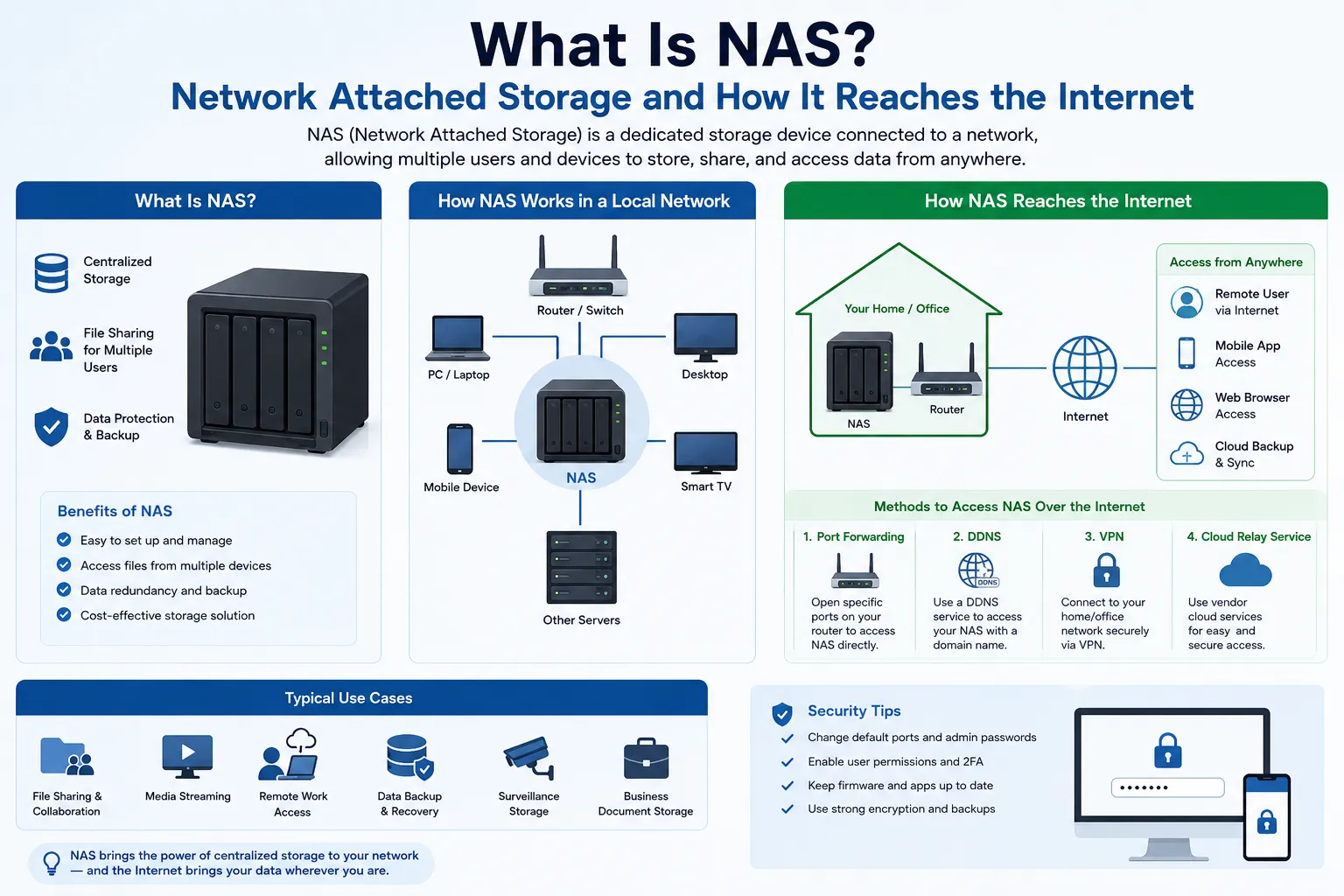
NAS stands for Network Attached Storage. It is a dedicated storage device that connects to a network and serves files Read more
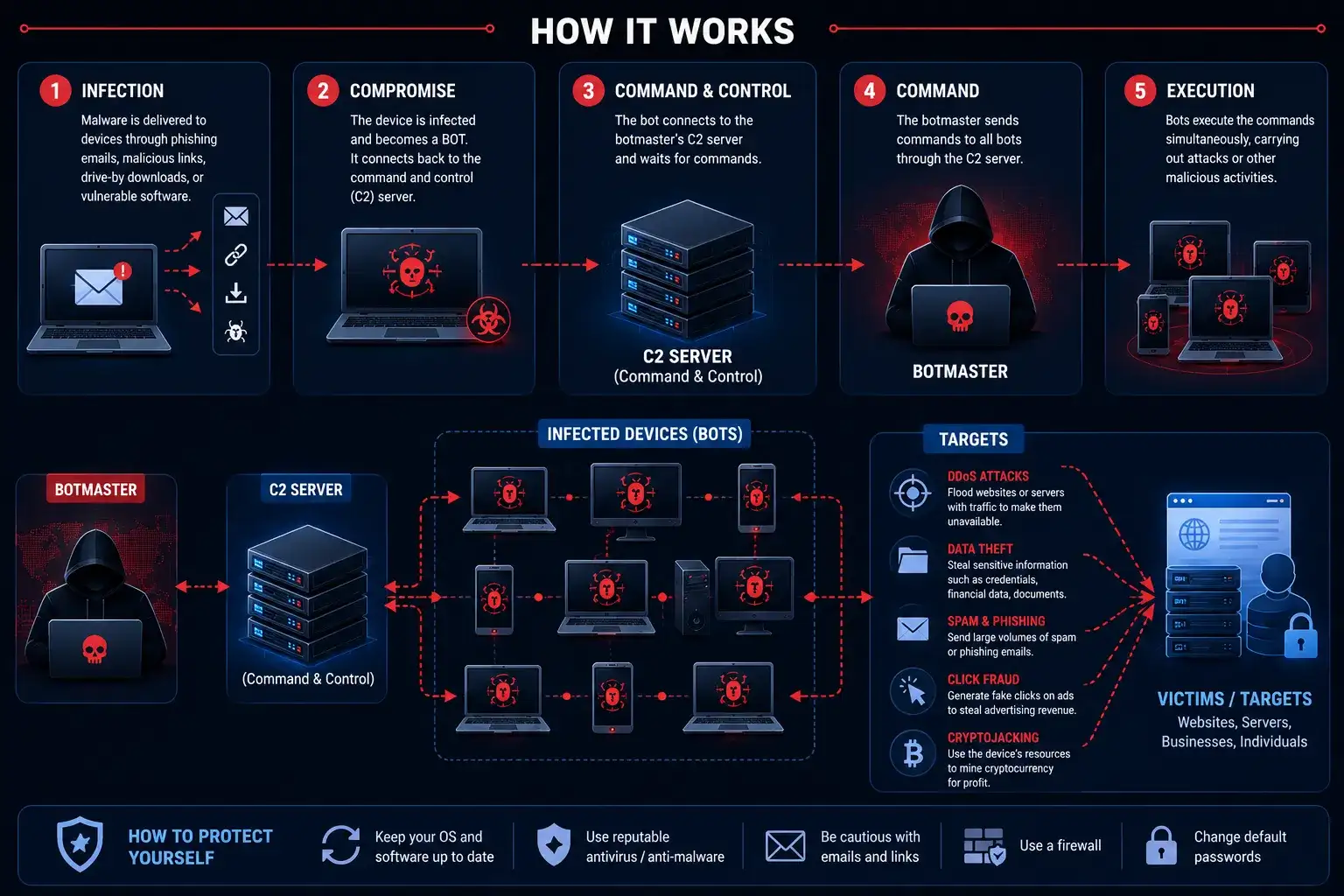
A botnet is a network of compromised computers or devices running malicious software that lets a single operator control them Read more