Can we get a fixed IP address if we use a VPN?
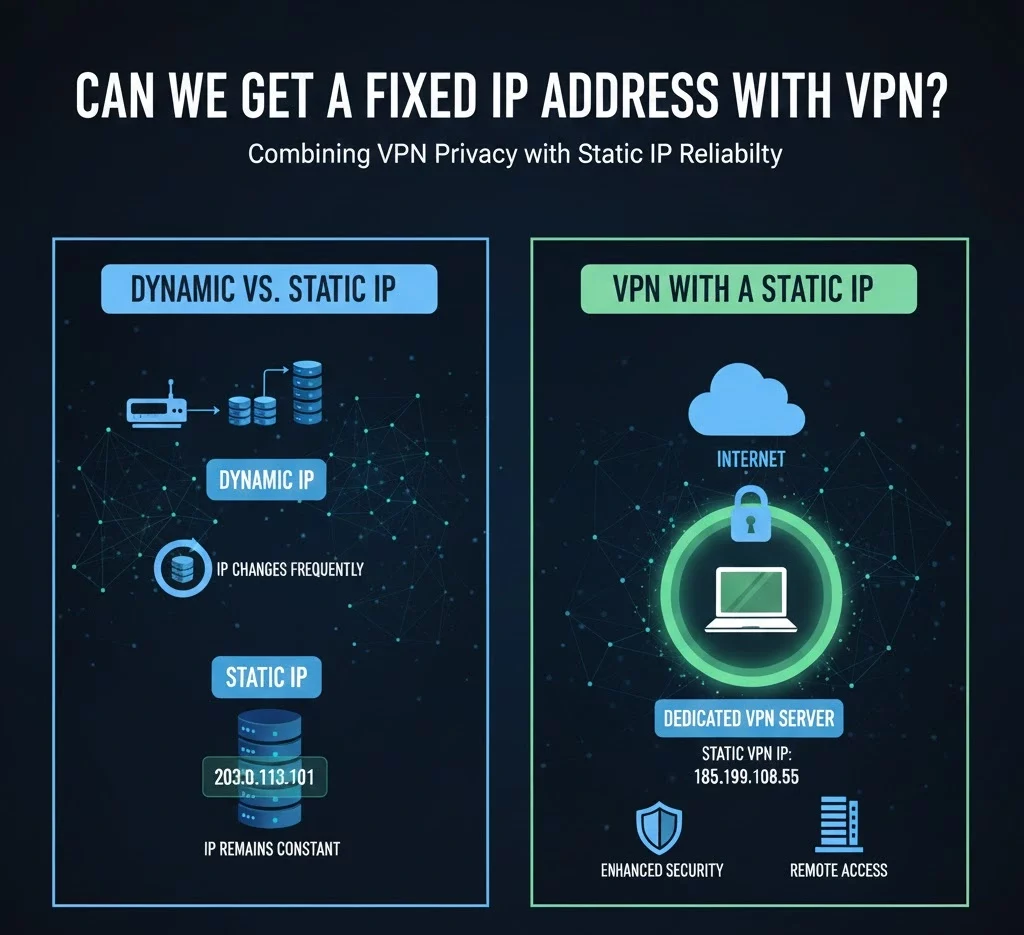
In the world of internet connectivity and digital privacy, Virtual Private Networks (VPNs) have become a staple tool for many users. One common question that arises is whether it’s possible to obtain a fixed IP address when using a VPN.
Table of Contents
Toggle
The answer is yes, but it depends on the VPN service provider you choose. In this article, we’ll explore how you can get a fixed IP address with a VPN, the benefits, and potential considerations.
Understanding Fixed IP Addresses via VPN
Dynamic vs. Static IP Addresses
When you connect to the internet, your device is assigned an IP address, which can either be dynamic or static.
Dynamic IP Address: Most standard VPN services provide dynamic IP addresses. This means the IP address assigned to you changes each time you connect to the VPN. While this enhances privacy, it can be inconvenient for activities requiring a consistent IP address.
Static IP Address: Some VPN providers offer static or fixed IP addresses. With a static IP, you get the same IP address each time you connect to the VPN, offering consistency and reliability.
Benefits of a Fixed IP Address
There are several advantages to using a fixed IP address through a VPN:
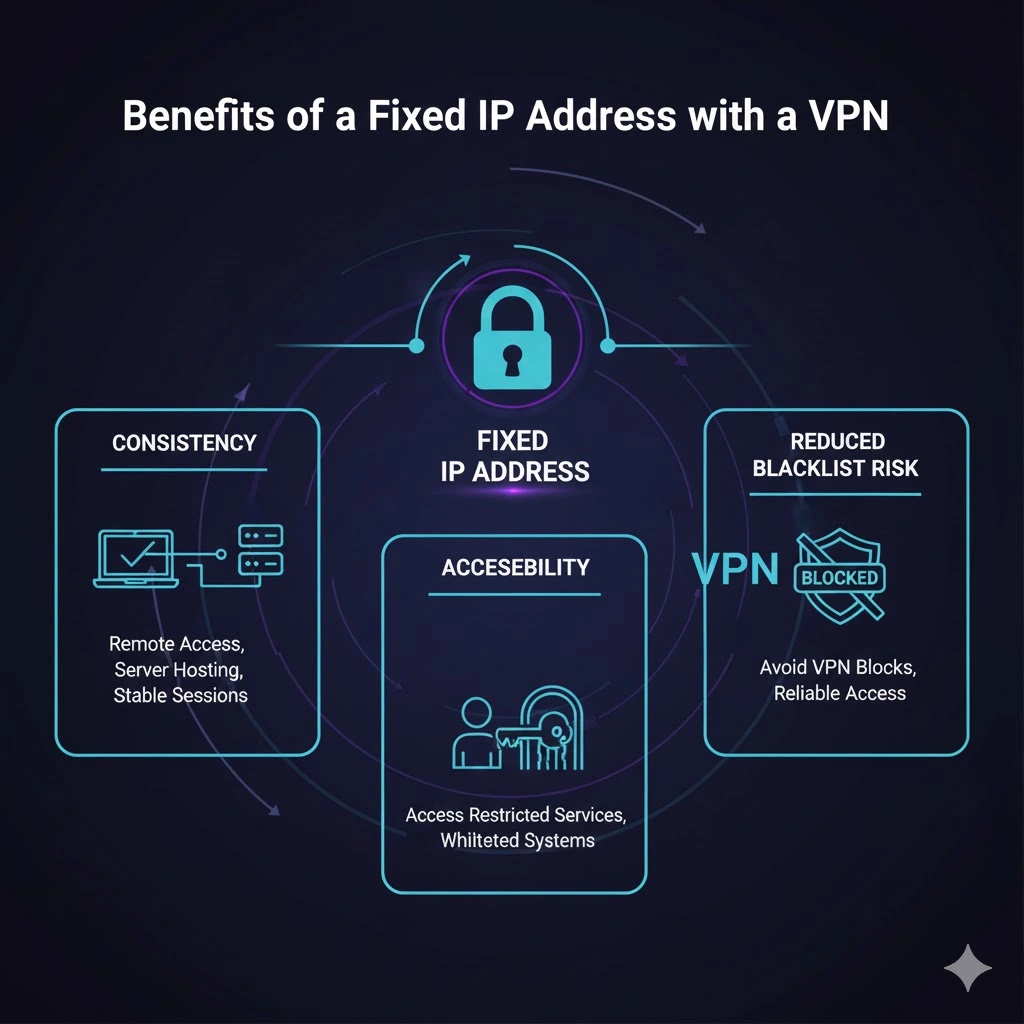
Consistency: A fixed IP address ensures that your IP address remains the same across sessions. This is particularly useful for remote access to systems, running a server, or accessing certain online services that require a consistent IP.
Accessibility: Fixed IP addresses make it easier to access certain services and systems that are restricted to specific IP addresses.
Reduced Risk of IP Blacklisting: Some websites and services might block dynamic IP addresses frequently used by VPNs. A fixed IP can reduce the risk of being flagged or blocked.
How to Get a Fixed IP Address with a VPN
Choose a VPN Provider: Look for VPN providers that offer static IP addresses as part of their service. Some popular VPN providers offering this feature include:
- NordVPN: Offers dedicated IP addresses in multiple countries.
- PureVPN: Provides dedicated IP options.
- CyberGhost: Has dedicated IP addresses available.
- TorGuard: Known for its dedicated IP address options.
Subscription Plans: Static IP addresses often come at an additional cost compared to standard VPN plans. Review the pricing and select a plan that includes a static IP feature.
Select Your Preferred Location: Depending on the provider, you may have options for the geographic location of your fixed IP address. Choose a location that suits your needs, whether for business or personal use.
Setup and Configuration: Once you’ve subscribed to a plan with a fixed IP address, follow the provider’s instructions to configure your VPN client. This usually involves logging in with your account details and selecting the static IP option.
Potential Limitations
While a fixed IP address can be beneficial, there are some potential limitations to consider:
Privacy Considerations: Using a fixed IP address can reduce some aspects of anonymity, as your online activities will consistently be associated with the same IP address. This could potentially make tracking easier.
Additional Costs: Static IP addresses typically come with an additional cost. Ensure the benefits align with your needs before committing to the extra expense.
In a nutshell, yes, you can get a fixed IP address with a VPN if you choose a provider that offers this service. It provides the advantage of consistency and reliability, which can be beneficial for various online activities. However, weigh the benefits against any potential privacy concerns and additional costs.
For more information on managing IP addresses and enhancing your network security, consider exploring the resources available at larus.net. They offer comprehensive solutions and expert advice tailored to your IP address management needs.
Trusted IPv4 Leasing for Business Growth
Get enterprise-grade IPv4 space quickly, with seamless deployment and end-to-end management.
FAQs
While often used interchangeably, there is a subtle difference. A Static IP just means the address doesn’t change. A Dedicated IP is a static IP that is exclusively assigned to you and not shared with any other users. Most premium VPNs offer “Dedicated IPs” to ensure you don’t get punished for the bad behavior of other users sharing the same server.
Not necessarily. A Dynamic IP (shared) offers better anonymity because your traffic is mixed with hundreds of other users, making you harder to track. A Fixed IP is easier to track back to your specific account, but it provides better usability for accessing secure networks, online banking, and remote desktop tools.
Yes, and it is highly recommended. Banks often flag accounts that log in from different IP addresses (locations) as suspicious fraud attempts. Using a Fixed IP helps you avoid these security lockouts by providing a consistent, trusted location for every login.
Buying IPv4 addresses outside proper IP Allocation channels exposes organisations to fraud, legal disputes, operational failures and long-term governance risks.Key Read more
Facing IPv4 shortages, companies must weigh cost, speed, and network growth when choosing a lease plan.Short-term leasing lets you scale Read more
IPv4 地址曾经只是互联网运行所需的基础资源。但在今天,它越来越像一种具有市场价格、可交易、可租赁的数字资产。造成这一变化的原因并不复杂:IPv4 的总量有限,而全球互联网对 IPv4 的需求并没有消失;与此同时,IPv6 虽然早已出现,但迁移进度依然缓慢。这三股力量叠加,正在重新塑造运营商对 IP 地址的看法,也改变了互联网基础设施的经济逻辑。原文将这点概括为“有限供给、持续需求与缓慢转型”,并指出这正在推动 IP 地址成为影响全球电信经济的可交易资产。 IPv4 稀缺并不是新问题 全球互联网至今仍大量依赖 IPv4。这个协议诞生于更早的时代,只能提供大约 43 亿个地址。这个数量在互联网初期似乎足够庞大,但在今天已经明显不够。原文指出,IANA 在 2011 年就已将最后一批大型 IPv4 Read more