LACNIC: All You Need To Know
LACNIC: Strengthening Internet Infrastructure in Latin America and the Caribbean
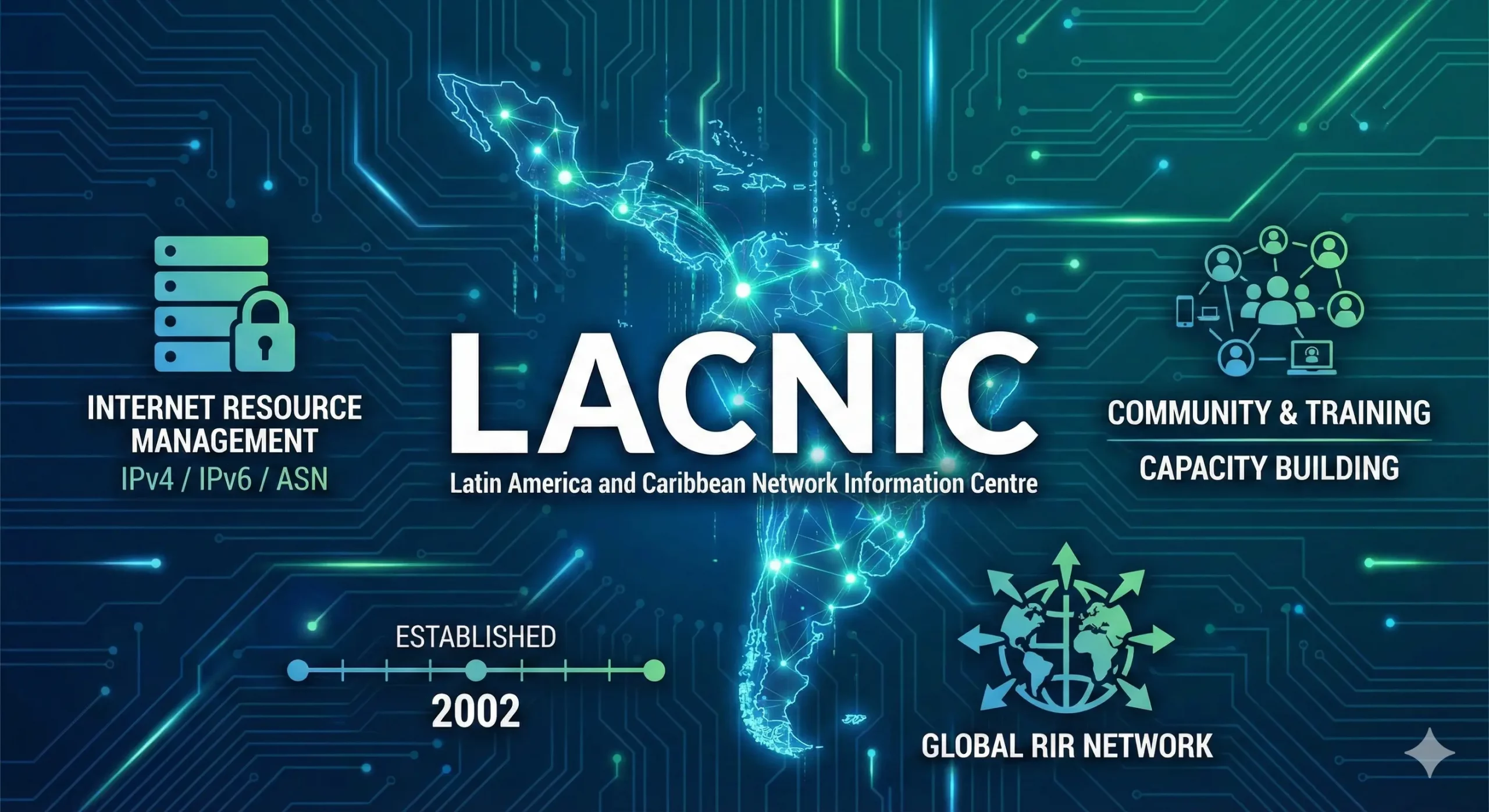
The Latin America and Caribbean Network Information Center (LACNIC) plays a vital role in shaping the digital landscape of Latin America and the Caribbean. As the region’s designated Regional Internet Registry (RIR), LACNIC is responsible for managing and distributing Internet number resources, including IPv4, IPv6 addresses, and Autonomous System Numbers (ASNs).
Table of Contents
Toggle
Operating as a non-profit community-led organization, LACNIC ensures the fair allocation of resources and actively contributes to Internet development, security, and policy-making in its 33 covered territories. With over 12,000 members, LACNIC fosters collaboration between governments, Internet service providers (ISPs), and the wider digital community to promote a secure and efficient internet ecosystem.
What is LACNIC
LACNIC is one of the five globally recognized Regional Internet Registries (RIRs) that oversee IP address distribution and Internet governance worldwide. The organization operates alongside:
- AFRINIC – Serving the African continent
- APNIC – Managing the Asia-Pacific region
- ARIN – Covering North America and parts of the Caribbean
- RIPE NCC – Serving Europe, the Middle East, and parts of Central Asia
Since its establishment in 2002, LACNIC has played a pivotal role in ensuring the efficient allocation of Internet number resources in Latin America and the Caribbean. The organization receives these resources from the Internet Assigned Numbers Authority (IANA) and redistributes them according to regional demand and policies.
Beyond resource management, LACNIC is committed to enhancing Internet accessibility, security, and governance, providing its members with technical training, cybersecurity solutions, and active participation in shaping global Internet policies.
Membership and Governance Model
LACNIC stands out for its community-driven governance approach. The organization is overseen by a board of seven directors, elected directly by its members. This democratic model ensures that decision-making aligns with the needs and priorities of the regional internet community.
Membership provides several key benefits beyond IP address allocation, including:
- Influence in Policy Development: Members can participate in shaping regional internet governance policies.
- Technical Training via LACNIC Campus: Online and in-person courses on network management, security, and IPv6 adoption.
- Cybersecurity Support from LACNIC CSIRT: A dedicated team that assists in preventing cyber threats and securing regional internet operations.
- Representation in Global Internet Governance Forums: LACNIC advocates for regional interests on the global stage.
- Collaboration with Internet Exchange Points (IXPs) and Tech Providers: Helping members optimize network performance and resource management.
Key Functions and Services Provided by LACNIC
LACNIC’s core mission is to strengthen and support Internet infrastructure across Latin America and the Caribbean. To achieve this, the organization provides a range of technical and strategic services, ensuring stability, security, and growth.
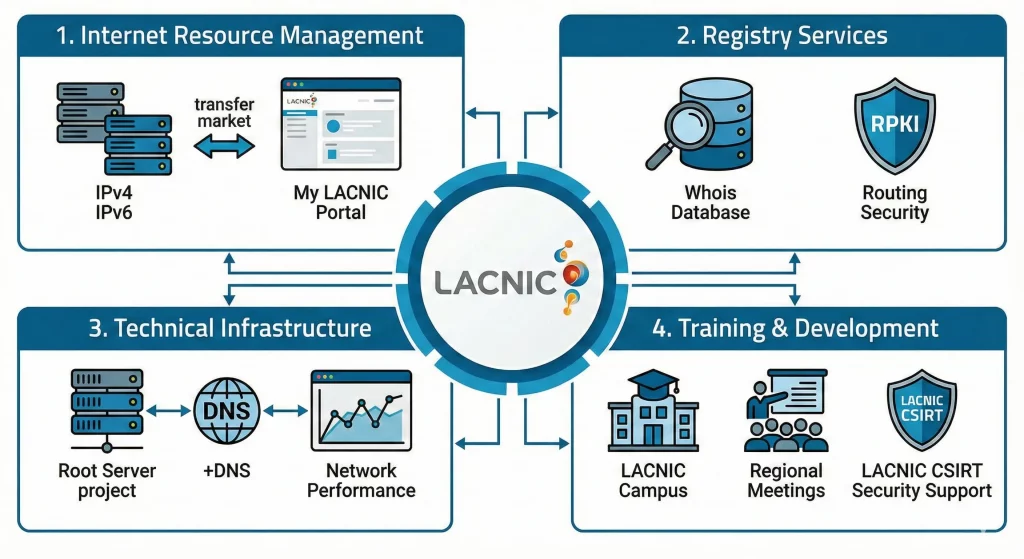
1. Internet Resource management
LACNIC oversees the allocation of IPv4 and IPv6 addresses and ASNs across Latin America and the Caribbean. The organization maintains a transfer market for IPv4 resources and promotes IPv6 adoption through streamlined allocation processes. Through its My LACNIC portal, members can manage their resources and handle administrative tasks efficiently.
2. Registry services
The LACNIC Whois database serves as the authoritative registry for IP allocations in the region. The database helps identify resource ownership, supports abuse prevention, and maintains transparency in resource distribution. LACNIC’s RPKI services enhance routing security by validating resource ownership and preventing unauthorized announcements.
3. Technical infrastructure
LACNIC provides essential DNS services, including Reverse DNS Management and the +RAICES project, which maintains root server copies to improve regional internet stability. The Internet Routing Registry helps operators manage routing policies, while monitoring tools track network performance and security across the region.
4. Training and development
LACNIC Campus provides training on IPv6, security, and network management. It hosts regional meetings for knowledge sharing and policy discussions. Through LACNIC CSIRT, members get security support and best practices guidance.
Trusted IPv4 Leasing for Business Growth
Get enterprise-grade IPv4 space quickly, with seamless deployment and end-to-end management.
Buying IPv4 addresses outside proper IP Allocation channels exposes organisations to fraud, legal disputes, operational failures and long-term governance risks.Key Read more
Facing IPv4 shortages, companies must weigh cost, speed, and network growth when choosing a lease plan.Short-term leasing lets you scale Read more
IPv4 地址曾经只是互联网运行所需的基础资源。但在今天,它越来越像一种具有市场价格、可交易、可租赁的数字资产。造成这一变化的原因并不复杂:IPv4 的总量有限,而全球互联网对 IPv4 的需求并没有消失;与此同时,IPv6 虽然早已出现,但迁移进度依然缓慢。这三股力量叠加,正在重新塑造运营商对 IP 地址的看法,也改变了互联网基础设施的经济逻辑。原文将这点概括为“有限供给、持续需求与缓慢转型”,并指出这正在推动 IP 地址成为影响全球电信经济的可交易资产。 IPv4 稀缺并不是新问题 全球互联网至今仍大量依赖 IPv4。这个协议诞生于更早的时代,只能提供大约 43 亿个地址。这个数量在互联网初期似乎足够庞大,但在今天已经明显不够。原文指出,IANA 在 2011 年就已将最后一批大型 IPv4 Read more