What is a Proxy IP?
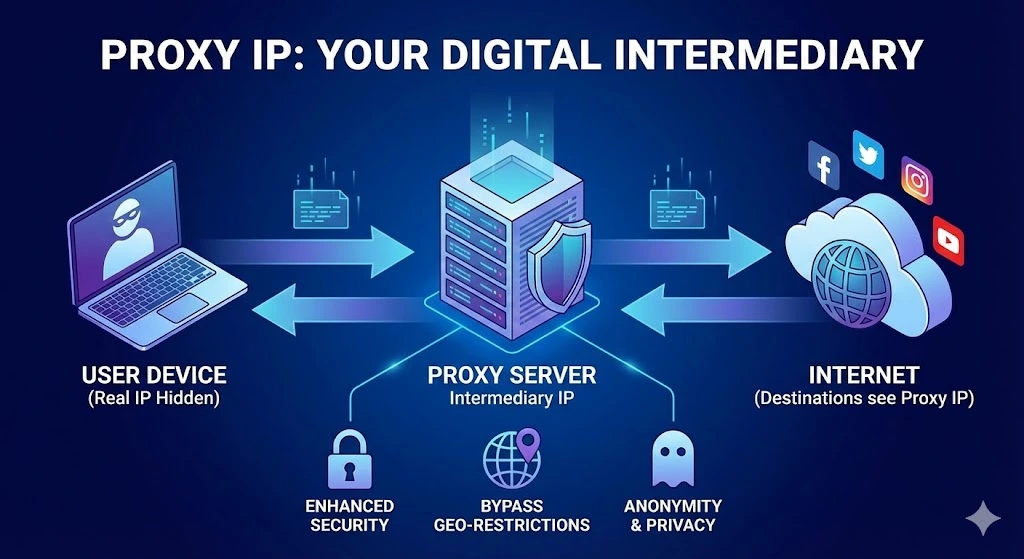
A proxy IP is an intermediary IP address used to mask or relay your original IP address when accessing the Internet. It acts as a gateway between the user and the web. When a request is made to access a website, the proxy server (which uses the proxy IP) forwards that request, hiding the user’s real IP address from the website. This allows for increased privacy and anonymity when browsing online.
Table of Contents
ToggleHow Proxy IP Works
When you use a proxy, your device sends a request to the proxy server, which forwards it to the target website. The website then sees the request as coming from the proxy server, not your IP. This shields your original identity and location from the website. Afterward, the website’s response is returned to the proxy server, which forwards it to you.
Types of Proxy IPs
HTTP Proxies: These only work for web pages and are great for browsing.
SOCKS Proxies: They handle a wider range of traffic, including emails, torrent files, and FTP.
Transparent Proxies: These identify themselves and pass the original IP address, often used in caching.
Anonymous Proxies: These hide the user’s IP address but identify themselves as proxies.
High Anonymity Proxies: These provide maximum privacy by not identifying themselves as proxies and completely hiding the user’s IP.
Key Functions and Use Cases
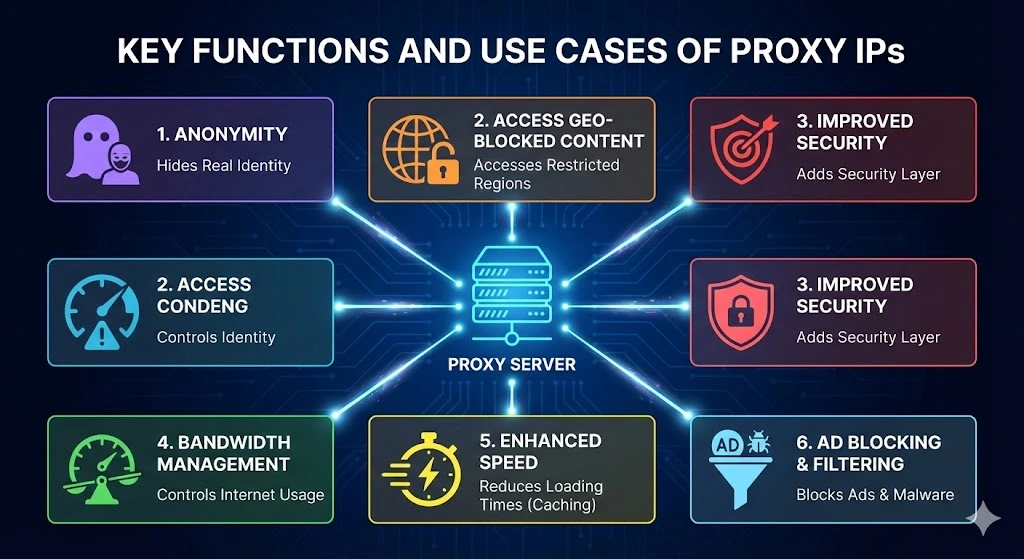
1. Anonymity: Proxy IPs hide your real identity online, allowing you to browse the web without revealing personal information.
2. Access Geo-Blocked Content: Proxies enable users to access content that is restricted in certain regions by assigning IPs from specific locations.
3. Improved Security: By masking the original IP address, proxy servers add a layer of security, making it harder for hackers to target the user directly.
4. Bandwidth Management: Proxies can help organizations manage and control internet bandwidth usage, preventing congestion.
5. Enhanced Speed: Certain proxies can cache web pages, reducing loading times for frequently accessed websites.
6. Ad Blocking and Filtering: Proxy servers can block ads, malware, or filter content to ensure a safer browsing experience.
Common Use Cases for Proxy IPs
1. Businesses: Companies use proxies for security, load balancing, and to prevent unauthorized access to their internal systems.
2. SEO and Marketing: Marketers use proxies to gather competitor data or analyze web traffic from different locations.
3. Streaming: Users rely on proxy IPs to bypass geo-restrictions and access content not available in their regions.
4. Privacy Enthusiasts: Those concerned with online privacy use proxy IPs to hide their real IP address while browsing.
The Difference Between Proxy and VPN
While both proxies and VPNs hide your IP address, a VPN encrypts all your internet traffic, offering a more secure connection. Proxies generally do not encrypt data, but they can be faster than VPNs for some use cases since they don’t handle heavy encryption.
Final Thoughts
Proxy IPs are essential tools for maintaining privacy, accessing restricted content, and improving online security. Whether for personal use, business operations, or marketing analysis, proxies offer a flexible solution to interact with the web more effectively. Some of the most popular proxy providers include Luminati, Smartproxy, and Bright Data, offering a range of services tailored to different needs.
Trusted IPv4 Leasing for Business Growth
Get enterprise-grade IPv4 space quickly, with seamless deployment and end-to-end management.
Buying IPv4 addresses outside proper IP Allocation channels exposes organisations to fraud, legal disputes, operational failures and long-term governance risks.Key Read more
Facing IPv4 shortages, companies must weigh cost, speed, and network growth when choosing a lease plan.Short-term leasing lets you scale Read more
IPv4 地址曾经只是互联网运行所需的基础资源。但在今天,它越来越像一种具有市场价格、可交易、可租赁的数字资产。造成这一变化的原因并不复杂:IPv4 的总量有限,而全球互联网对 IPv4 的需求并没有消失;与此同时,IPv6 虽然早已出现,但迁移进度依然缓慢。这三股力量叠加,正在重新塑造运营商对 IP 地址的看法,也改变了互联网基础设施的经济逻辑。原文将这点概括为“有限供给、持续需求与缓慢转型”,并指出这正在推动 IP 地址成为影响全球电信经济的可交易资产。 IPv4 稀缺并不是新问题 全球互联网至今仍大量依赖 IPv4。这个协议诞生于更早的时代,只能提供大约 43 亿个地址。这个数量在互联网初期似乎足够庞大,但在今天已经明显不够。原文指出,IANA 在 2011 年就已将最后一批大型 IPv4 Read more