What is BYOIP (Bring Your Own IP)?

Bring Your Own IP, commonly known as BYOIP, allows a business to use its existing public IP address range with a cloud provider, data centre, content delivery network, or other infrastructure platform.
Table of Contents
ToggleInstead of accepting a new public IP range assigned by the provider, the business brings an IPv4 or IPv6 prefix that it already controls. The provider then verifies the organization’s authority to use the range and, where supported, advertises it through its own network.
BYOIP can help businesses preserve firewall rules, allowlists, customer integrations, IP reputation, DNS configurations, and established network identity during cloud migration. It can also reduce dependency on provider-assigned IP addresses and make future infrastructure changes easier to manage.
Businesses that need address resources for BYOIP can explore Buy IP options for long-term control or use IPv4 Leasing when flexible access is more suitable.
What is BYOIP?
BYOIP stands for Bring Your Own IP. It is a networking model that allows an organization to bring an existing public IP address range to a cloud provider or infrastructure platform.
The organization continues to control or hold the rights to use the IP range, while the platform is authorized to advertise and use the range within its infrastructure. The addresses can then be assigned to supported services such as virtual machines, load balancers, VPN gateways, content delivery services, security platforms, or public application endpoints.
For example, a business moving applications from an on-premises data centre to a cloud environment may not want to replace its existing public IP addresses. Those addresses may already appear in customer allowlists, firewall policies, DNS records, partner configurations, or email reputation databases.
BYOIP lets the business move the workloads while keeping the public network identity more consistent.
How does BYOIP work?
BYOIP works by allowing a business to authorize a cloud or infrastructure provider to advertise and use a public IP prefix that the business already controls. The IP range is verified, registered with the platform, authorized for routing, and then assigned to supported cloud or network resources.
The business does not simply upload a list of IP addresses. BYOIP is a coordinated routing process involving address eligibility, registry records, proof of authority, BGP announcements, RPKI validation, cloud configuration, and migration planning.
In practical terms, the infrastructure may move to a new platform, but the public IP addresses used by customers, applications, firewalls, partners, and security systems can remain the same.
BYOIP process at a glance
- The business selects an eligible public IP prefix.
- The provider verifies that the business controls or is authorized to use it.
- The business authorizes the provider’s network to originate the prefix.
- The provider provisions the range in the customer’s account.
- The previous route is withdrawn or migrated according to the deployment plan.
- The provider advertises the prefix through BGP.
- Individual addresses are assigned to supported cloud or network resources.
- The business monitors routing, reputation, DNS, geolocation, and availability.
Step 1: Select an eligible public IP prefix
The business begins by identifying a public IPv4 or IPv6 prefix that it owns or has permission to use. The range must be globally unique and must satisfy the provider’s minimum prefix-size requirements.
For IPv4, many providers require a /24 prefix because routes smaller than /24 may not be accepted consistently across the global internet. A /24 IPv4 block contains 256 addresses, although the number that can be assigned to workloads depends on the provider and network configuration.
The business should also confirm that the range is not already committed to an incompatible service, locked into another provider, or covered by a lease agreement that prevents third-party routing.
Step 2: Prove control or authorization
The cloud or infrastructure provider must verify that the customer has the authority to bring the IP range.
Depending on the platform, this verification may rely on:
- RDAP or WHOIS registration records
- A digital certificate published in the registry record
- A signed authorization message
- A Letter of Authorization
- RPKI records
- IRR route objects
- Approval from the registered address holder
This step prevents an organization from importing and advertising address space that belongs to another party.
Step 3: Authorize the provider to originate the route
Once control is verified, the business may need to authorize the provider’s Autonomous System Number to originate the IP prefix.
This is commonly done through a Route Origin Authorization. A ROA states which ASN is permitted to announce a specific IP prefix through BGP. When configured correctly, it helps other networks confirm that the cloud provider’s route announcement is valid.
The ROA should include the correct prefix, authorized ASN, and maximum prefix length. An incorrect value can cause the route to appear RPKI-invalid, which may make the IP range unreachable from networks that reject invalid announcements.
Step 4: Provision the IP range with the provider
After verification and authorization, the provider provisions the prefix in the customer’s cloud account, project, subscription, or network environment.
At this stage, the range is registered within the provider’s system but may not yet be publicly advertised. Some platforms describe this status as provisioned, onboarded, validated, or pending advertisement.
The business should confirm:
- Which regions can use the prefix
- Which products support imported addresses
- How the range will be divided into smaller internal pools
- Whether reverse DNS delegation is supported
- Whether the provider applies additional onboarding charges
Step 5: Prepare the routing transition
A BYOIP migration must account for the route that currently announces the prefix.
If the range is already active in another data centre or network, the business must coordinate when the old route will be withdrawn and when the new provider will begin advertising it. Poor timing can create a routing gap, conflicting route origins, or an unintended BGP origin change.
The migration plan should identify:
- The current origin ASN
- The new provider ASN
- The planned withdrawal time
- The expected BGP propagation period
- Rollback procedures
- Monitoring responsibilities
Where possible, the business should migrate in stages instead of moving all applications at once.
Step 6: The provider advertises the IP prefix
After the range is commissioned, the provider announces the prefix to the internet through BGP.
External networks receive the new route and begin directing traffic for that IP range toward the provider’s infrastructure. The cloud provider manages the upstream BGP announcements, while the customer manages how individual addresses are assigned within the platform.
This is the point at which the business’s existing IP range becomes reachable through the new cloud or network environment.
Step 7: Assign addresses to cloud and network resources
Addresses from the imported range can then be allocated to supported services. These may include:
- Virtual machines
- Load balancers
- NAT gateways
- VPN gateways
- Firewalls
- CDN services
- DDoS protection platforms
- Email infrastructure
- Public application endpoints
Support varies by provider. A platform may accept a BYOIP prefix but limit which regions, products, or resource types can use the imported addresses.
Step 8: Update DNS, security, and operational controls
Although BYOIP can preserve public IP addresses, the underlying infrastructure still changes. Businesses should verify all systems connected to the migration.
This includes:
- DNS and reverse DNS records
- Firewall policies
- Customer and partner allowlists
- VPN configurations
- Monitoring platforms
- Security alerts
- API access rules
- Email authentication and reputation controls
Keeping the same IP range reduces external changes, but it does not remove the need to test the new infrastructure.
Step 9: Monitor routing and IP quality after migration
After the prefix becomes active, the business should monitor both network reachability and address quality.
Important checks include:
- BGP route visibility
- RPKI validity
- Unexpected origin AS changes
- Regional reachability
- Latency and packet loss
- IP geolocation
- Blocklist status
- Email deliverability
- Application health
Geolocation databases may take time to recognize that the IP range is operating from a new region or provider. Businesses should submit correction requests when inaccurate geolocation affects customers, fraud checks, licensing, or content delivery.
Step 10: Maintain a withdrawal and exit plan
BYOIP improves portability, but an imported prefix cannot usually be moved instantly between providers.
Before deployment, the business should understand how to:
- Stop the provider’s BGP advertisement
- Remove addresses from cloud resources
- Deprovision the imported prefix
- Update the ROA and other routing records
- Return the route to the original network
- Move the range to another supported provider
This exit plan is especially important when the IP range is leased. The lease term, renewal schedule, lessor cooperation, and routing authorization must remain aligned with the cloud deployment.
Simple BYOIP example
Consider a SaaS company that currently operates from a private data centre using a /24 IPv4 block. Its customers have added those IP addresses to firewall allowlists, and several partners use them to identify trusted API traffic.
If the company moves to a cloud provider using newly assigned cloud IPs, every customer and partner may need to update its configuration. This can delay migration and create support issues.
With BYOIP, the company verifies its authority over the /24 block, authorizes the cloud provider’s ASN, provisions the range, migrates its applications, and then allows the provider to advertise the same prefix. Customers continue connecting to the same public IP addresses even though the workloads now run in a different environment.
That is the main operational value of BYOIP: the infrastructure can change without forcing the public network identity to change at the same time.
How does BYOIP work in simple terms?
BYOIP works by verifying a company’s authority over a public IP range and allowing a cloud provider to advertise that range through its network. The company can then assign its existing IP addresses to supported cloud services while preserving firewall rules, allowlists, DNS configurations, reputation, and customer access.
Why businesses use BYOIP
BYOIP is valuable when changing an IP address would create operational or commercial disruption.
Preserving network identity
Public IP addresses may be connected to customer configurations, security policies, integrations, and established network identity. Keeping the same addresses can reduce the number of systems that must be reconfigured during migration.
Reducing cloud migration disruption
Without BYOIP, moving to a new provider may require changes to DNS records, firewall rules, access-control lists, partner allowlists, VPN configurations, and customer documentation.
BYOIP can reduce this workload by allowing the public IP layer to remain more consistent while the underlying infrastructure changes.
Maintaining IP reputation
Some IP addresses develop an established reputation over time. This is particularly important for email delivery, APIs, cybersecurity services, and platforms that are evaluated by fraud or reputation systems.
For example, Amazon explains that organizations can use their own IP addresses with Amazon SES when they want to preserve the positive sending reputation developed through an existing email system. Read the AWS guidance on using BYOIP with Amazon SES.
Supporting allowlists and partner access
Customers and partners may restrict access to known IP addresses. Changing those addresses can require coordinated updates across multiple organizations.
BYOIP helps preserve the addresses already included in those allowlists.
Improving multi-cloud flexibility
Provider-assigned addresses are usually tied to the provider that issued them. BYOIP gives businesses more control over the address layer and may reduce provider dependency.
However, businesses must still review each provider’s deployment, withdrawal, regional, and transfer limitations.
Supporting business continuity
When public addresses are treated as part of infrastructure planning, they can support migration, disaster recovery, failover, and long-term continuity strategies.
BYOIP vs provider-assigned IP addresses
| Comparison Point | BYOIP | Provider-Assigned IP |
|---|---|---|
| Address control | The customer controls or is authorized to use the prefix. | The provider controls the address. |
| Portability | Potentially easier to move between supported environments. | Usually tied to the original provider. |
| Migration impact | Can preserve existing IP-based configurations. | Migration may require address changes. |
| Setup complexity | Requires verification, routing authorization, and planning. | Usually simple to allocate and deploy. |
| Minimum range | Provider-specific minimum prefix requirements apply. | Single addresses may be available. |
| Reputation continuity | Can preserve an established reputation. | New addresses may require reputation rebuilding. |
| Long-term dependency | Can reduce reliance on provider-controlled addresses. | Creates greater dependency on provider address pools. |
Provider-assigned addresses are often sufficient for small workloads or projects without portability requirements. BYOIP becomes more useful when public addresses are embedded in business operations, customer access, security policy, or reputation.
Common BYOIP use cases
Cloud migration
An enterprise moving workloads from an on-premises data centre to the cloud can preserve its existing public IP range and reduce changes to external systems.
Hybrid cloud
Businesses operating both on-premises and cloud infrastructure may use BYOIP as part of a controlled migration or hybrid network strategy.
Multi-cloud infrastructure
Organizations using multiple providers may want greater control over public addressing, although a prefix generally cannot be advertised from multiple providers at the same time without a carefully designed routing arrangement.
Email infrastructure
Businesses may use BYOIP to preserve sending reputation when moving email workloads to a supported cloud email service.
Content delivery and DDoS protection
BYOIP can allow a business to retain its public IP space while using a content delivery network, traffic acceleration platform, or DDoS protection service.
Customer-facing SaaS platforms
SaaS providers may use established IP ranges for APIs, allowlists, customer integrations, dedicated environments, and regional application endpoints.
VPN and security gateways
Businesses can preserve public gateway addresses that are already configured in employee devices, customer systems, firewall policies, or partner networks.
Disaster recovery
BYOIP may support recovery planning by allowing the organization to use familiar public addresses in an alternative supported environment, subject to provider commissioning and routing timelines.
Advantages and Disadvantages of BYOIP
| Advantages | Disadvantages |
|---|---|
| Preserves existing public IP addresses during migration | Requires more technical and administrative preparation |
| Reduces changes to firewall rules and allowlists | Provider minimum prefix-size requirements may apply |
| Can preserve email and network reputation | RPKI, RDAP, BGP, and registry updates may be required |
| Improves control over public network identity | Not every cloud service or region supports BYOIP |
| May reduce provider lock-in | Moving the prefix between providers still requires planning |
| Supports cloud, hybrid-cloud, and continuity strategies | Poor route transition planning can create downtime |
| Can keep customer and partner configurations stable | Leased ranges may require additional authorization and continuity safeguards |
The main advantage of BYOIP is control. Businesses can change infrastructure while keeping an important part of their public network identity.
The main disadvantage is complexity. BYOIP requires coordination between registry records, routing authorization, cloud configuration, security policy, and application migration.
Conclusion
BYOIP allows businesses to change cloud or network infrastructure without automatically giving up the public IP addresses already connected to their operations.
It can simplify cloud migration, preserve customer allowlists, maintain IP reputation, support hybrid infrastructure, and reduce reliance on provider-assigned address space. However, successful BYOIP requires more than control of an address block. It requires registry verification, routing authorization, RPKI planning, reputation checks, provider compatibility, and a carefully managed route transition.
For businesses using BYOIP, public IP resources become part of the cloud migration plan itself. i.lease helps infrastructure teams access suitable IPv4 resources through Buy IP and IPv4 Leasing options, while organizations with unused address space can explore opportunities to Sell IP.
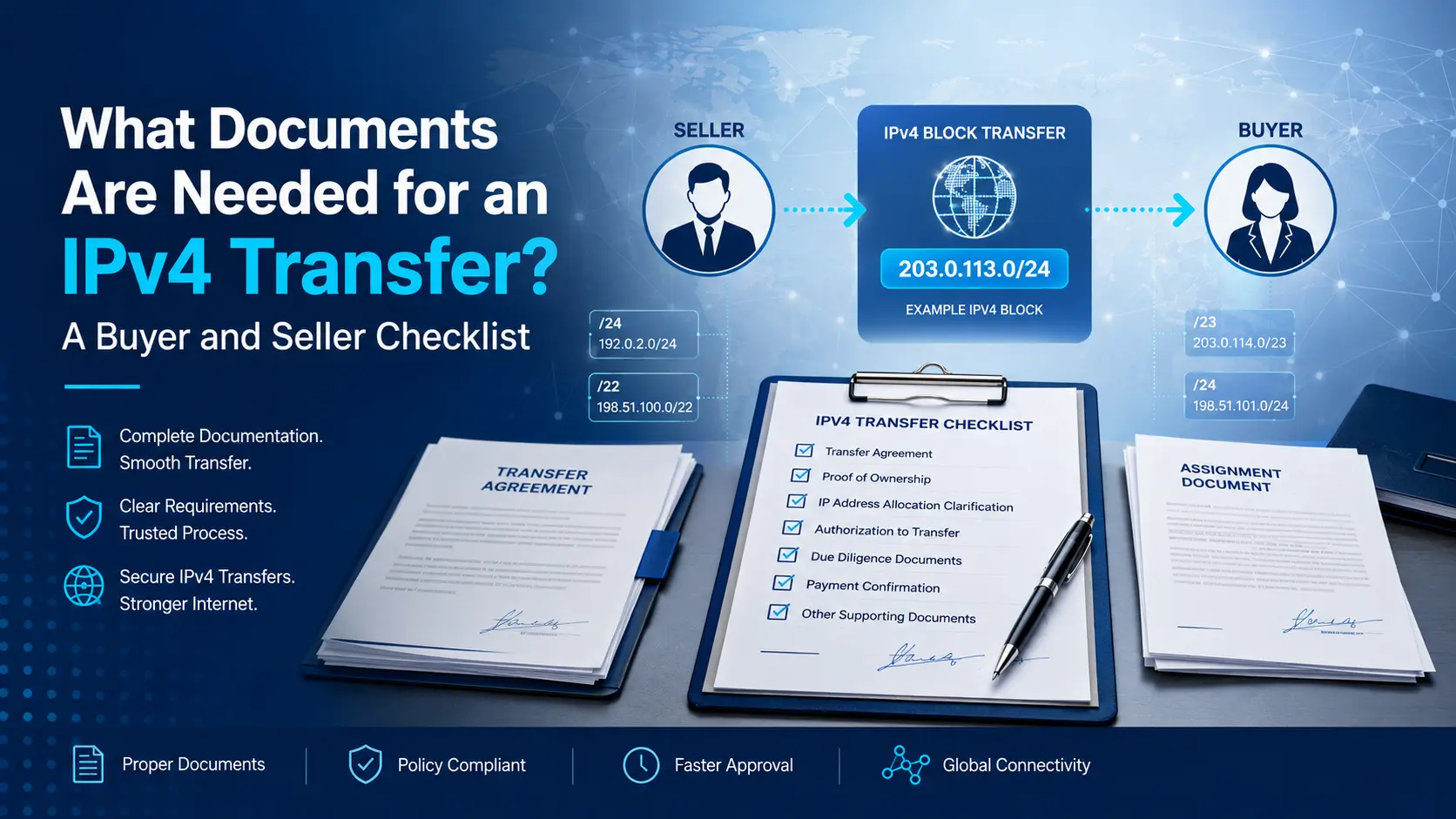
Transferring IPv4 address space from one organization to another involves more than agreeing on a prefix and a price. A Read more
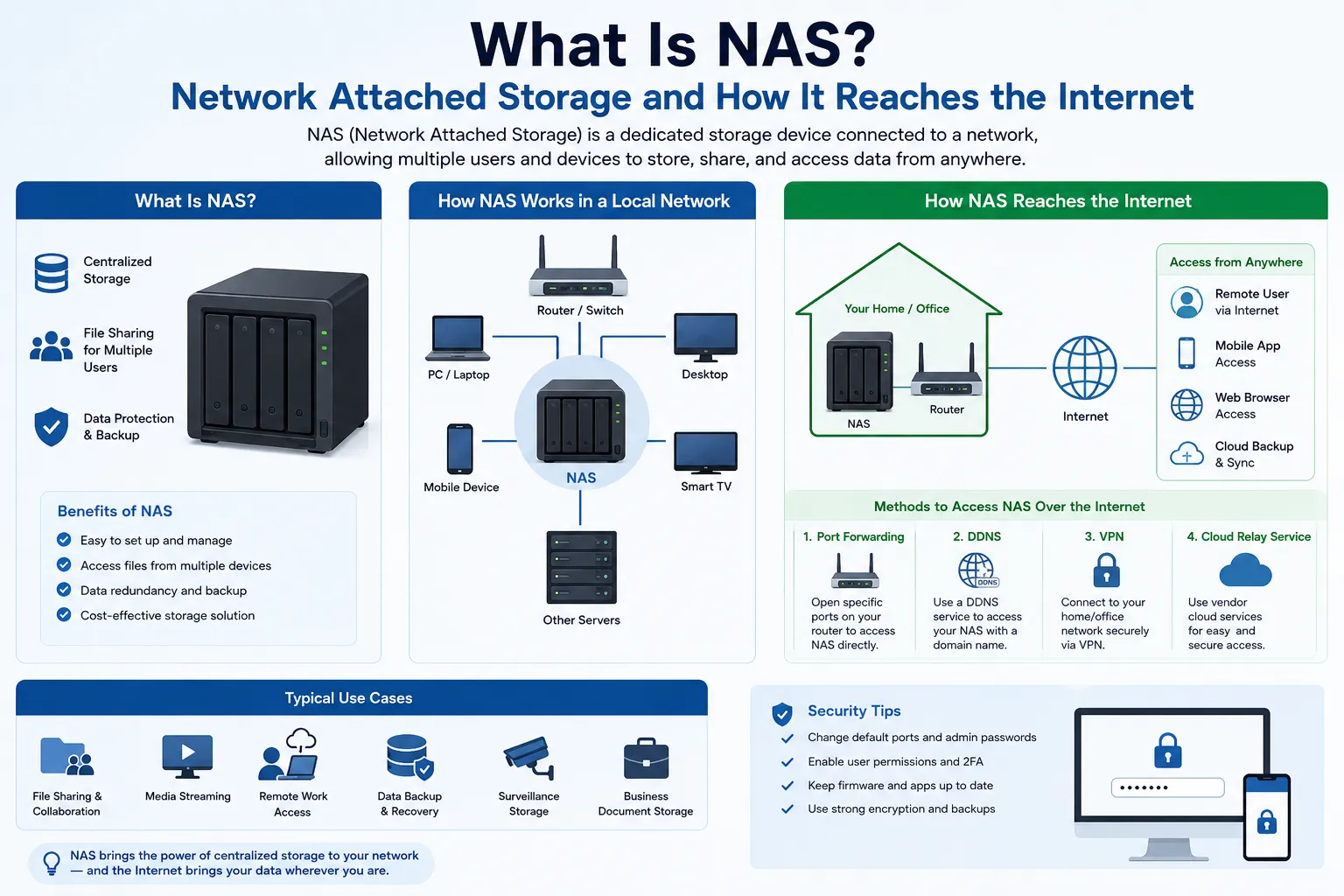
NAS stands for Network Attached Storage. It is a dedicated storage device that connects to a network and serves files Read more
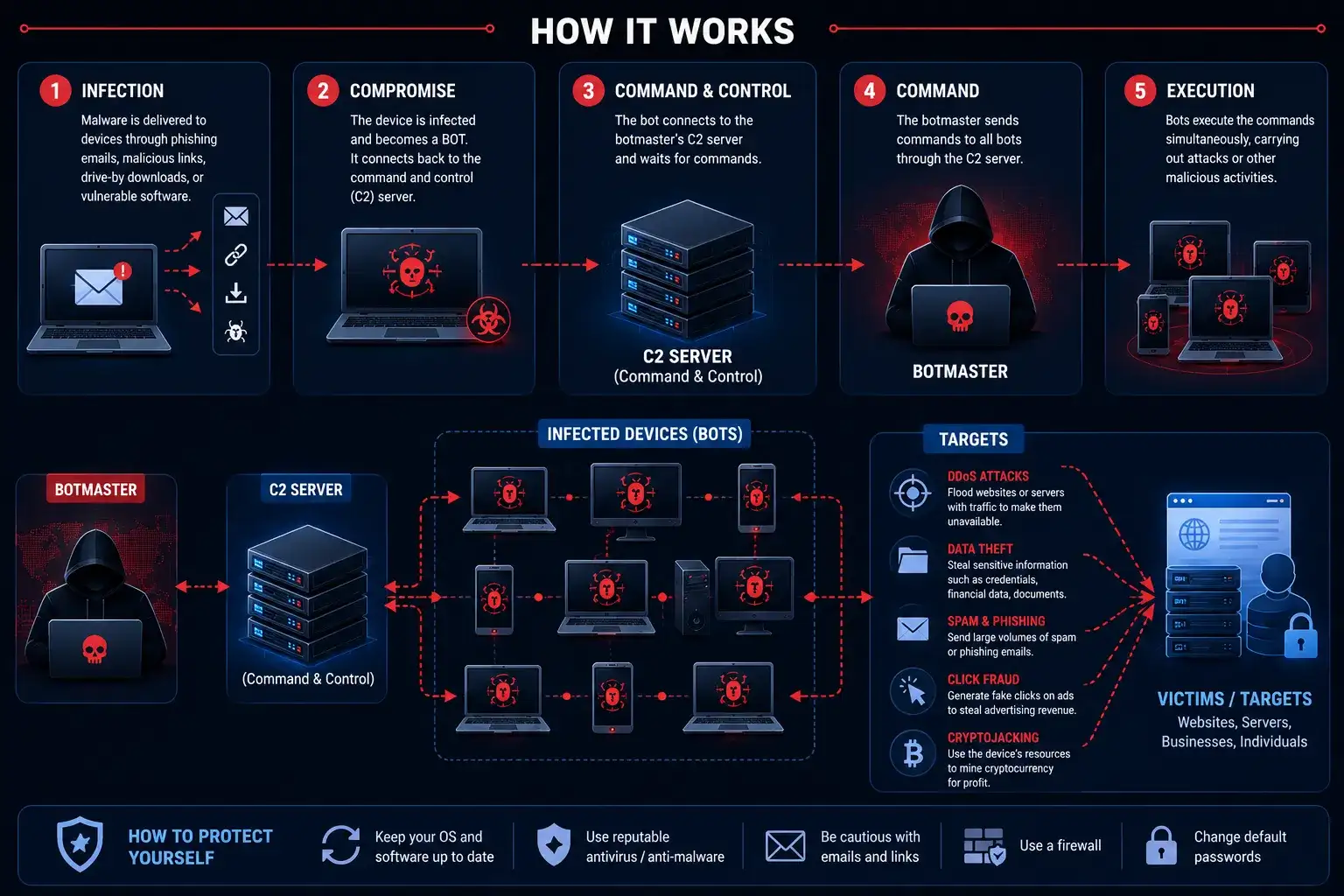
A botnet is a network of compromised computers or devices running malicious software that lets a single operator control them Read more