What Is a Network Operator? How Network Operators Support Connectivity in the UK, US, and Canada
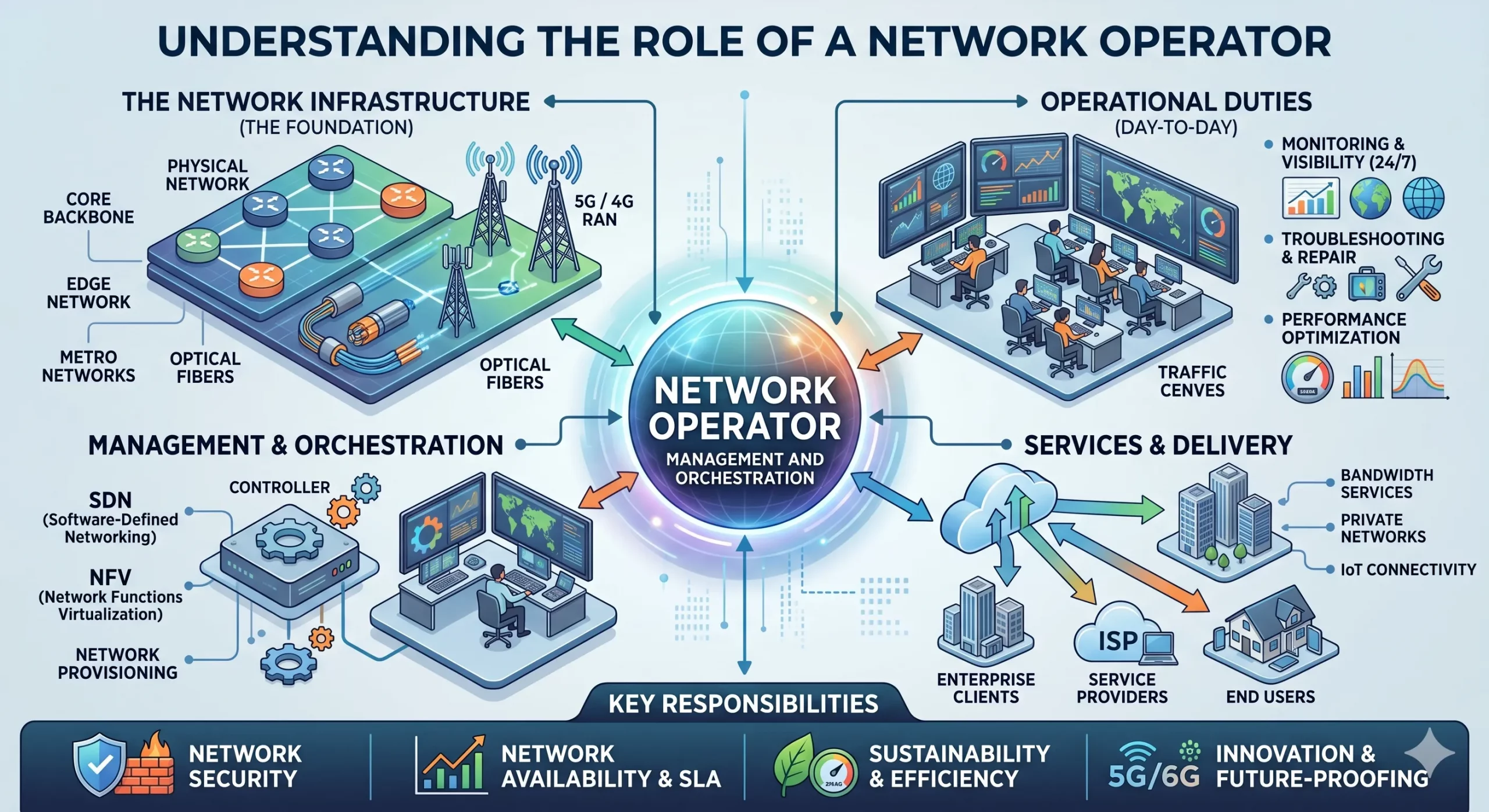
A network operator is an organization that builds, manages, or operates the infrastructure used to move data between users, businesses, devices, cloud platforms, and the wider internet.
Table of Contents
ToggleNetwork operators may manage fibre networks, mobile networks, internet backbone routes, fixed wireless networks, data centre connectivity, enterprise networks, or wholesale access networks. Some network operators sell services directly to consumers, while others provide infrastructure to internet service providers, telco companies, cloud platforms, data centres, and business customers.
For businesses, network operators are important because they support the connectivity layer behind websites, cloud applications, VPNs, enterprise systems, mobile services, and digital platforms. Without network operators, modern internet services would not be able to reach users reliably
What is a Network Operator?
A network operator is a company or organization responsible for operating network infrastructure. This infrastructure may include fibre cables, routers, switches, mobile towers, wireless systems, submarine cable links, internet exchanges, data centre connections, and routing equipment.
The role of a network operator is to keep traffic moving between networks. This may involve building infrastructure, managing routing, maintaining uptime, monitoring performance, upgrading capacity, and ensuring that customers can access services reliably.
In simple terms, a network operator helps make connectivity possible.
What does Network Operator do?
Network operators perform several important functions.
They may build and maintain physical network infrastructure such as fibre routes, mobile sites, and data links. They may also manage routers, switches, BGP routing, IP address resources, interconnection agreements, and traffic engineering.
A network operator may be responsible for:
- Network planning
- Fibre or wireless infrastructure
- Internet routing
- BGP announcements
- Data centre connectivity
- Wholesale access
- Mobile coverage
- Enterprise connectivity
- Traffic monitoring
- Network security
- Service reliability
- Capacity upgrades
The exact role depends on the type of operator. A mobile network operator focuses on mobile coverage and wireless services. A backbone operator focuses on long-distance data movement. A data centre network operator focuses on interconnection, routing, and customer connectivity inside or between facilities.
Network Operator vs ISP vs Telco Company
The terms network operator, ISP, and telco company are related, but they are not always the same.
- A Network Operator runs network infrastructure.
- An ISP Provides internet access to customers.
- A Telco Company provides telecommunications services such as mobile, broadband, fibre, voice, enterprise connectivity, and sometimes cloud or managed services.
Some companies are all three. For example, a large telecom company may operate its own network, provide internet access, and sell telecom services to consumers and businesses.
Other companies focus on only one layer. A wholesale network operator may operate fibre infrastructure but sell capacity to other service providers instead of directly serving households. A data centre network operator may manage interconnection and routing for enterprise customers.
For businesses, the key point is that network operators are part of the infrastructure layer that keeps digital services reachable.
Types of Network Operators
There are several types of network operators.
Fixed network operators
Fixed network operators manage wired infrastructure such as fibre, cable, DSL, or Ethernet networks. These networks are used for home broadband, enterprise connectivity, data centres, and business internet services.
Mobile network operators
Mobile network operators manage wireless networks such as 4G and 5G. They operate spectrum, mobile towers, radio access networks, core networks, and customer connectivity.
Backbone network operators
Backbone operators manage long-distance high-capacity networks that move large volumes of traffic between cities, countries, data centres, internet exchanges, and cloud regions.
Wholesale network operators
Wholesale network operators sell network access or capacity to other providers. They may not sell directly to consumers but still play a major role in national connectivity.
Data centre network operators
Data centre network operators manage connectivity inside and between data centres. This includes routing, peering, cross-connects, internet transit, cloud on-ramps, and customer network access.
Enterprise network operators
Large enterprises may operate their own private networks across offices, cloud environments, data centres, and remote sites.
Why Network Operators matter for Business
Businesses rely on network operators for reliable digital operations.
A slow, unstable, or poorly connected network can affect websites, applications, payment systems, customer portals, remote work, cloud platforms, and internal tools.
Network operators support:
- Business internet connectivity
- Cloud access
- Data centre connections
- VPN services
- Remote work infrastructure
- E-commerce platforms
- SaaS applications
- Streaming and content delivery
- Mobile connectivity
- Enterprise security systems
- Disaster recovery and backup links
For businesses that operate online services, connectivity is not just a technical matter. It affects customer experience, uptime, revenue, and trust.
Network Operators in the UK
In the UK, network operators support broadband, mobile, fibre, wholesale connectivity, enterprise networks, and data centre access.
The UK communications regulator Ofcom tracks national broadband and mobile availability through its Connected Nations reports. In the Ofcom Connected Nations Spring 2026 update, Ofcom reported that gigabit-capable broadband availability had increased to 89% of UK homes. The same update also reported that 4G geographic coverage across the UK landmass from at least one mobile network operator remained at 96%, while 5G coverage continued to expand.
This shows why network operators are important in the UK. They are not only providing consumer broadband or mobile plans. They are building and maintaining the infrastructure that supports business connectivity, digital services, and regional network availability.
For UK businesses, network operator planning may involve fibre access, leased lines, cloud connectivity, data centre routes, mobile backup, and public IP resource planning.
Network Operators in the US
The United States has a large and diverse network operator landscape. Operators include fibre providers, cable broadband networks, mobile carriers, fixed wireless providers, backbone networks, rural broadband providers, data centre networks, and enterprise connectivity providers.
The US Federal Communications Commission collects broadband availability information through the FCC Broadband Data Collection. The FCC’s Broadband Data Collection includes location and broadband availability data and is used to understand where fixed broadband services are available.
This matters because the US market covers very different environments: dense cities, suburbs, rural regions, remote communities, enterprise campuses, data centre hubs, and cloud regions. Network operators must support different access technologies and business needs across this geography.
For US businesses, network operator decisions may affect latency, redundancy, cloud access, data centre location, remote office connectivity, and service availability.
Network Operators in the Canada
Canada’s network operators support connectivity across a very large geography. This includes major cities, rural communities, northern regions, business districts, data centres, mobile networks, fibre infrastructure, cable networks, satellite services, and fixed wireless access.
The CRTC Canadian Telecommunications Market Report 2026 states that total telecommunications services revenues in Canada were $59.62 billion in 2024. The same report notes that fixed Internet and mobile wireless services represented 84% of total telecommunications revenues.
This shows how central internet and mobile connectivity have become to Canada’s telecommunications market. Network operators are not only supporting phone or internet services. They are supporting the infrastructure layer behind businesses, public services, cloud platforms, remote work, and digital access.
For Canadian businesses, network operator planning may involve coverage, redundancy, regional access, cloud connectivity, data sovereignty, and reliable public network resources.
Why IP Resource planning matters for Network Operators
Network operators need more than fibre, towers, routers, and switches. They also need address resources, routing policies, BGP readiness, and connectivity planning.
IP resources are used for:
Customer services
Broadband networks
VPN gateways
Cloud platforms
Data centre services
Hosting infrastructure
Enterprise access
Network management
Security systems
Public-facing applications
For network operators, IP planning affects reachability, routing, customer onboarding, service quality, and business continuity.
A network can have strong physical infrastructure, but if IP resources and routing are not planned properly, customers may still face access problems, delays, or service instability.
Practical note from i.lease
Network operators need reliable public connectivity to support real services. Whether the business operates broadband access, mobile infrastructure, data centre networks, VPN services, hosting platforms, or enterprise connectivity, IP resource planning is part of network growth.
i.Lease supports network operators and infrastructure teams that need to Buy IP Addresses, Sell IP Addresses, or use Lease IP Addresses for practical network expansion.
Final thoughts
A network operator is part of the infrastructure layer that keeps digital services connected. Network operators support broadband, mobile, cloud, data centre, enterprise, and regional connectivity.
In the UK, US, and Canada, network operators play a central role in expanding broadband availability, improving mobile coverage, supporting business connectivity, and enabling digital services.
For businesses, the main lesson is simple: connectivity planning should not stop at choosing a service provider. Businesses should also consider routing, redundancy, public IP resources, data centre access, and long-term network continuity.
Frequent Asked Questions (FAQs)
A network operator is an organization that builds, manages, or operates network infrastructure used to move data between users, businesses, devices, cloud platforms, and the internet.
Not always. An ISP provides internet access to customers, while a network operator manages the infrastructure that supports connectivity. Some companies do both.
A network operator focuses on operating network infrastructure. A telco company usually provides telecommunications services such as mobile, broadband, fibre, voice, and enterprise connectivity.
Businesses need network operators for reliable internet access, cloud connectivity, VPNs, data centre links, enterprise networks, and customer-facing digital services.
IP planning matters because network operators need public address resources, routing readiness, BGP support, and reliable connectivity to keep customer services reachable.

Transferring IPv4 address space from one organization to another involves more than agreeing on a prefix and a price. A Read more
NAS stands for Network Attached Storage. It is a dedicated storage device that connects to a network and serves files Read more
A botnet is a network of compromised computers or devices running malicious software that lets a single operator control them Read more