Who Controls Your IPv4 Future? Mandate Laundering and Hidden Governance Risk

Your business may think it controls its IPv4 strategy. You choose a provider. You lease or buy address space. You build servers, launch platforms, support customers, and scale infrastructure.
Table of Contents
ToggleBut behind every IPv4 decision sits a deeper question most businesses never ask: who really controls the rules behind your address space?
IPv4 risk is not only about price, supply, or technical setup. It is also about governance. If a narrow administrative layer begins acting like a wider authority, your business may become exposed to decisions made by people you never appointed, processes you never joined, and interpretations you never approved.
That is the danger of mandate laundering in the IPv4 market. A small coordination function can slowly become a control layer. By the time businesses notice, the risk may already be sitting above their network.
What Is Mandate Laundering?
Mandate laundering happens when a limited coordination role is made to look larger than it really is. A technical process becomes “community authority.” A service region becomes “regional representation.” Internal procedure becomes a claim of legitimacy. Over time, a narrow administrative function may begin to act as if it has wider public authority.
For businesses that depend on IPv4, this matters because address space is no longer a low-value technical record. IPv4 supports hosting, cloud services, telecom networks, SaaS platforms, VPN infrastructure, data centres, customer access, and revenue-generating systems.
When IPv4 becomes business-critical, the layer that controls recognition, transferability, documentation, or policy interpretation can affect real economic value. If that layer expands its authority without carrying proportional responsibility, businesses may face uncertainty they never planned for.
Why It Matters for IPv4 Users
Most businesses only focus on whether they can get IPv4 addresses. They ask about price, block size, delivery time, and routing support. Those questions are important, but they are not enough.
A safer IPv4 strategy must also ask:
- Who controls the source of the address space?
- Which registry process affects the transfer or recognition?
- Can the address space move if business needs change?
- Does the provider understand RIR-related requirements?
- What happens if policy interpretation changes?
- Who carries the risk if the coordination layer becomes unstable?
If these questions are ignored, your business may believe it has secured IPv4 access while still depending on governance assumptions it does not control.
That is the fear businesses should take seriously: your IPv4 may work today, but your future flexibility may depend on rules written somewhere else.
The Danger of Hidden Governance Risk
Governance risk is dangerous because it often looks harmless at the beginning. It may appear as paperwork, policy review, transfer process, documentation, compliance language, or “community” decision-making.
But if those processes affect whether your address space can be recognized, transferred, renewed, routed, or used as planned, they are no longer minor administrative details. They become business-continuity risks.
The danger is not always sudden. It can appear slowly:
- A transfer takes longer than expected.
- A policy interpretation becomes unclear.
- A provider cannot answer registry-related questions.
- A block becomes harder to move across regions.
- Operational plans become dependent on third-party approval.
- Business expansion slows because IPv4 access is no longer predictable.
This is how IPv4 risk becomes frightening. The problem may not begin with downtime. It may begin with uncertainty. And uncertainty is enough to delay infrastructure, weaken bargaining power, and increase cost.
What Happens When Authority Expands?
When a coordination layer expands beyond its narrow technical purpose, businesses may face a new kind of risk. The address space still works, but the rules around it become heavier. The market still exists, but movement becomes harder. The asset still has value, but its value may be discounted by uncertainty.
For IPv4 buyers, this can mean transfer friction, documentation burden, approval delays, and uncertainty over cross-registry movement. For IPv4 lessees, it can mean dependency on provider structure, renewal terms, routing support, and registry-aware operations. For IPv4 holders, it can mean difficulty turning unused resources into market value if the process becomes unclear or slow.
In every case, the business carries the practical downside. Customers do not care whether the delay came from a provider, registry process, transfer rule, or administrative interpretation. They only see that the service is delayed, unstable, or unavailable.
That is why IPv4 planning must go beyond “Can we get addresses?” The better question is: “Can we keep control of our IPv4 strategy when the governance layer changes?”
Sovereignty Inversion and IPv4 Control
When authority expands beyond narrow coordination, businesses may face a deeper control problem. This is the practical business meaning of Sovereignty Inversion: the company may operate the network, serve the customers, finance the infrastructure, and depend on the IPv4 addresses, but practical control over recognition, transferability, or movement can shift upward into a governance layer the company does not control.
In IPv4 planning, this matters because business ownership and operational dependence are not always the same as practical control. A company may believe it controls its IPv4 future because the addresses are assigned, leased, or purchased. But if transfer rules, documentation requirements, registry interpretation, or regional policy can limit what the company does next, control is no longer fully inside the business.
Mandate laundering makes that inversion easier to miss. A limited coordination role may be presented as community authority. A service region may be presented as regional representation. A registry process may be treated as if it carries wider legitimacy. Over time, businesses can find themselves depending on rules they did not design and processes they cannot easily change.
The result is not always immediate downtime. The first symptom may be slower transfers, reduced flexibility, harder expansion, weaker bargaining power, or uncertainty over whether an IPv4 block can move with the business. For companies that depend on IPv4, that uncertainty can become a real business cost.
Why i.lease Helps Businesses Plan Better
i.lease helps businesses approach IPv4 access as a structured market decision instead of a blind dependency on unclear sourcing or informal arrangements.
For companies that need flexibility, IPv4 leasing can support deployment with operational assistance, LOA-related workflows, and registry-aware coordination. For organisations that need long-term control, buying IPv4 addresses through a structured marketplace can help reduce sourcing and transfer uncertainty. For holders of unused address space, selling IPv4 addresses through a marketplace can help turn idle resources into business value through a more organized process.
The goal is not only to obtain IPv4. The goal is to avoid being trapped by hidden authority claims, unclear provider chains, weak documentation, or governance friction that only becomes visible when your business is already exposed.
A safer IPv4 strategy should consider supply, contract structure, transfer path, routing readiness, reputation, provider accountability, and registry-related risk. Waiting until a policy issue or transfer delay affects your business gives you fewer options and less control.
If your business depends on IPv4, do not wait until someone else’s interpretation controls your timeline. Plan your IPv4 access before governance risk becomes a business problem.
Before your IPv4 future is shaped by rules you never approved, explore i.lease for structured IPv4 leasing, buying, and selling options.
Further Reading
Frequent Asked Questions
Mandate laundering refers to the process where a narrow administrative or coordination role is presented as if it carries broader authority. In IPv4 governance, this matters because registry-related decisions can affect recognition, transfers, continuity, and market access.
Businesses should care because IPv4 addresses support real infrastructure. If governance processes, transfer rules, or provider structures become uncertain, the impact may affect deployment, routing, customer access, and business continuity.
No. IPv4 risk can appear at several layers, including provider sourcing, leasing contracts, transfer documentation, routing support, IP reputation, registry process, and renewal terms. A good IPv4 strategy should consider all of these layers together.
Buying IPv4 may provide long-term control, but it does not automatically remove all governance risk. Transfer approval, registry documentation, routing readiness, and policy alignment still matter. Ownership without structure can still leave a business exposed.
i.lease provides a structured marketplace approach for IPv4 leasing, buying, and selling. This helps businesses compare options, plan access, and reduce reliance on unclear sourcing or rushed decisions when IPv4 becomes urgent.

Transferring IPv4 address space from one organization to another involves more than agreeing on a prefix and a price. A Read more
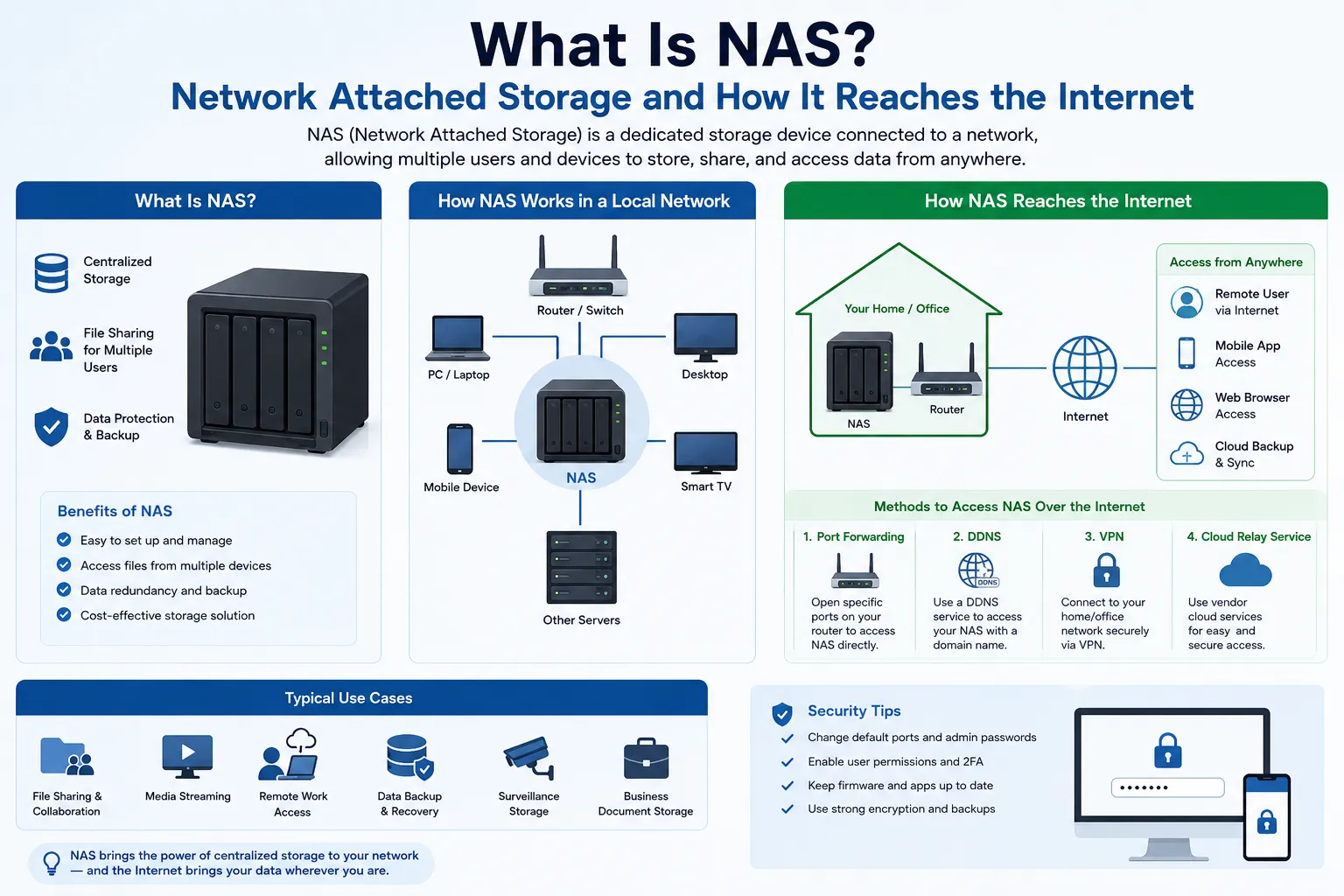
NAS stands for Network Attached Storage. It is a dedicated storage device that connects to a network and serves files Read more
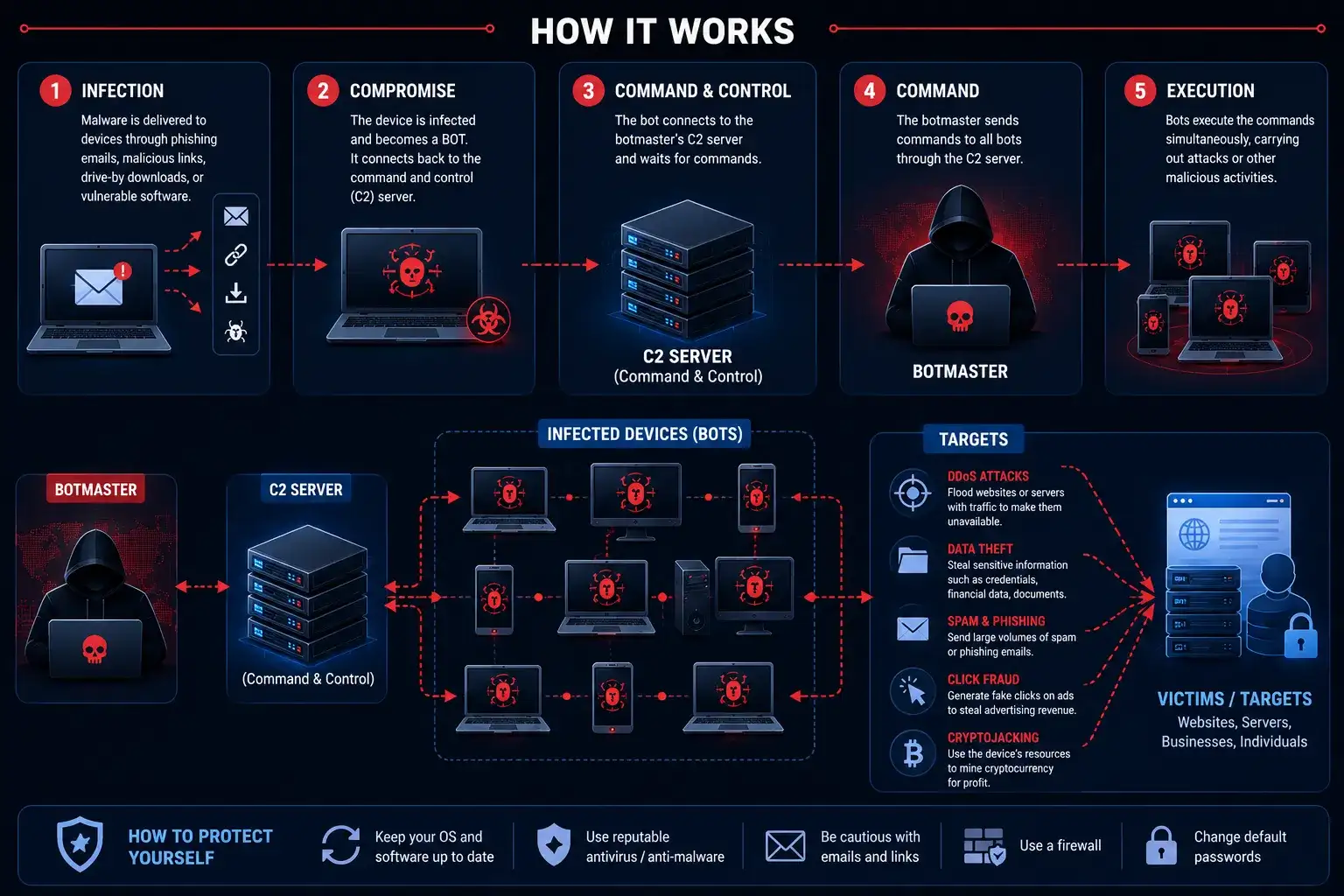
A botnet is a network of compromised computers or devices running malicious software that lets a single operator control them Read more