
如何获取 IPv4 地址
The demand for Internet-based services and tools has gone up drastically. This created a huge increase in the need for IP addresses. This guide will walk you through the process of how to get an IPv4 address.
Table of Contents
ToggleWhat are IPv4 Blocks?
If you want to know how to get an IPv4 address, first we’ll need to discuss what IPv4 blocks are. This is because you cannot acquire IP addresses individually. Instead, IPv4s are distributed in blocks.An IPv4 block refers to a set of IP addresses that you can get as an end-user or as a business owner.
The Internet Assigned Numbers Authority (IANA) manages these resources on a global scale. Consequently, these blocks are distributed to Regional Internet Registries (RIRs). In turn, RIRs allocate smaller blocks to Internet Service Providers (ISPs) or directly to end users.
Reasons for Acquiring IPv4 Blocks
You may need IPv4 blocks for various purposes. As your business expands its online presence, you’ll need IPv4 addresses for the following reasons:
a. To support your growing network.
As your business grows, you will need more IP addresses to support the devices connected to your network.
b. To host websites and applications.
You can use a third-party hosting service for your applications and websites. But if you prefer a more secure connection, you will need a dedicated pool of IP addresses.
c. To enable remote access.
If you want to allow your employees to access your network remotely, you will need dedicated IP addresses for them to use.To future-proof your network infrastructure.
The IPv4 address pool is finite and there will not enough to go around in the future. It is important to acquire IPv4 blocks now to ensure that your network will be able to grow in the future.
How to Get IPv4 Addresses Through a Broker
An IP address broker can simplify the process of IP address acquisition.
IPv4 brokers serve as intermediaries, connecting sellers and buyers in the market. They can simplify the acquisition of IPv4 addresses. i.lease helps businesses treat IPv4 access as a structured market decision, not just a quick technical purchase. In a market shaped by leasing, buying, selling, routing, documentation, registry expectations, and continuity risk, businesses need to understand more than the monthly price.
They can help you access a wider range of addresses, guide you through legalities, and negotiate fair prices. They also help businesses like yours comply with policies and regulations in your region.
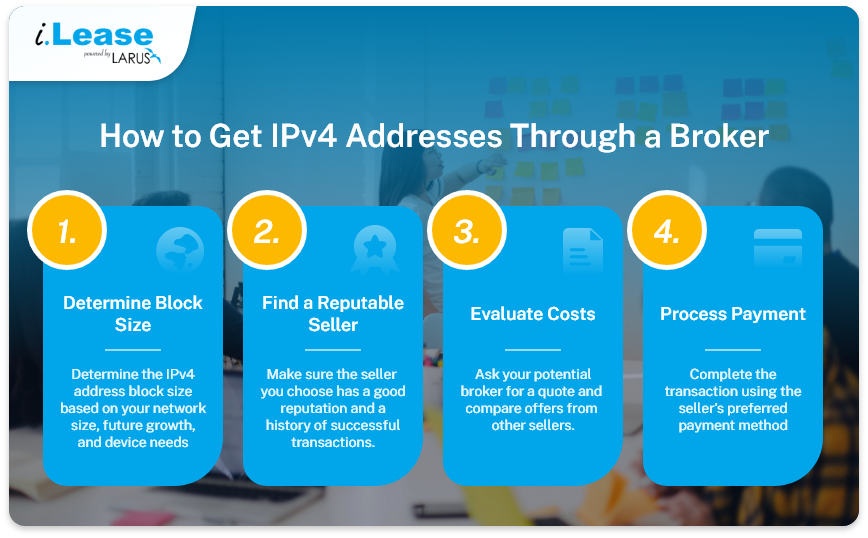
These are the general steps on how to get an IPv4 address block with the help of a broker:
1. Determine the block size that you need
Evaluate the size of the IP block you need based on your network size, anticipated growth, and device requirements.
2. Find a reputable seller
Some brokers may sell IP addresses that are not secure or addresses that have been previously used for spamming.
Evaluate the reputation of a seller before signing up their services. Work with reputable IP brokers who have a track record of successful transactions and reputable deals.
3. Evaluate the costs
Request a quote from your potential broker and consider the price. Compare offers from other sellers while keeping in mind the cost per block size, the current demand, and market value. This helps you ensure that you get a fair deal.
Generally, these are the factors that affect the cost of IPv4 Blocks:
Location: Prices may vary based on regional demand, with certain areas experiencing higher costs.
Size: Larger IPv4 blocks tend to be more expensive due to their scarcity and appeal to larger organizations.
Quality: The history and reputation of IP addresses within a block may impact its price.
4. Process your payment
Once you have evaluated the costs of your IPv4 blocks and the reputation of your seller, it’s time to close the transaction. Each seller will have their own transaction method. Typically, you can purchase your IP address blocks with online payments and credit cards.
How to Get IP Address Blocks with a Regional Internet
Registry (RIR)
Alternatively, you have the option to request IPv4 blocks from a regional Internet registry directly. Here are the general steps to follow:
1. Join your region’s registry as a member. In most cases, RIRs will ask you to become a member before you can request an IPv4 block.
2. Demonstrate your need for IP assets. You’ll need to fill out forms and provide documentation to justify the valid uses for the IP blocks you’re requesting.
3. Expect a representative to reach out. A representative from your RIR will contact you to discuss your request and requirements.
4. Complete the necessary payments. Some RIRs will require you to pay fees as part of your application process. Once your application is approved and the payments are processed, the transfer of IP address blocks will begin.Keep in mind that your RIR may put you on a waiting list instead of immediately providing the IP blocks you request.
Some important points to remember
If you’re thinking about getting IPv4 blocks in the near future, there are some important points to consider:
1. IPv4 block prices are on the rise.
Over the past few years, the cost of IPv4 blocks has been steadily increasing. Acting promptly will ensure you secure them at a more reasonable price.
2. Limited availability of IPv4 blocks.
Since the pool of IPv4 addresses is finite, there’s a restricted supply of IPv4 blocks. Waiting too long may result in not being able to obtain the required blocks.
3. Challenges in acquiring IPv4 addresses.
To simplify the process, save time, and minimize risks, it’s beneficial to collaborate with reputable IPv4 brokers. This way, you’ll gain a better understanding of how to obtain an IPv4 address block.
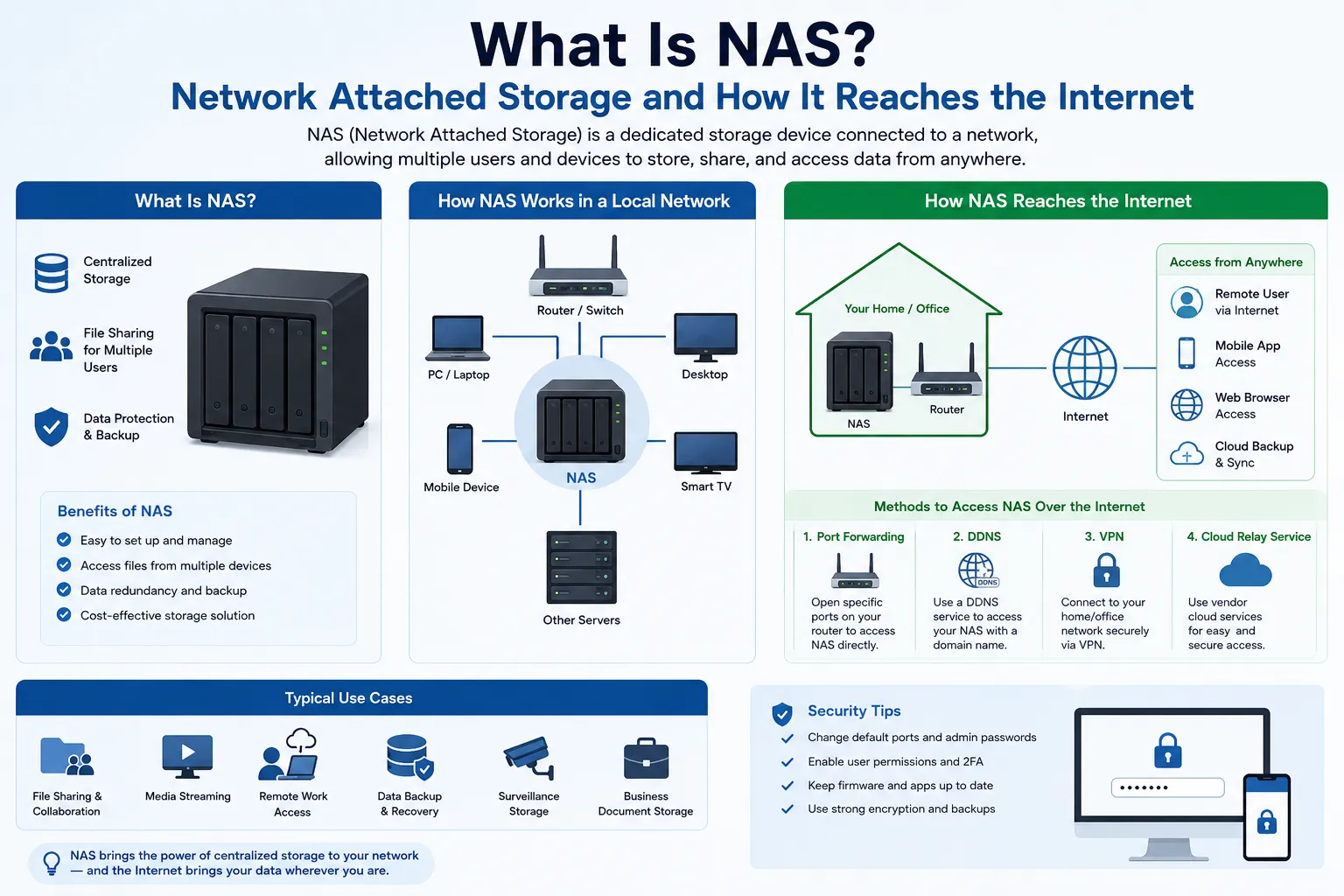
NAS 是 Network Attached Storage(网络附加存储)的缩写。它是一种连接到网络的专用存储设备,为该网络中所有经过授权的计算机、服务器或应用程序提供文件访问,而不是把数据分别存放在各台设备上。 普通外接硬盘通常只属于一台电脑,而 NAS 则属于整个网络。对于企业来说,这种差异在实际运营中非常重要。NAS 将存储从“每台设备各自处理的问题”转变为一种共享服务:项目文件、备份、数据库转储、媒体归档和监控录像都可以集中存放在一个位置,并通过统一的权限管理和冗余机制进行保护。但 NAS 本身也是一种网络设备,因此同样受到网络架构相关限制的影响。默认情况下,它通常使用私有 IP 地址,位于 NAT 之后,对公共互联网并不可见。最后这一点,往往正是大多数 NAS 部署出现问题的地方。硬盘工作正常,共享目录也能顺利挂载,在办公室内部一切看起来都没有问题——直到有人尝试从另一个地点访问 NAS,却发现完全无法连接。本指南将解释什么是 NAS、它与其他存储方案有什么不同,以及在 IP Read more
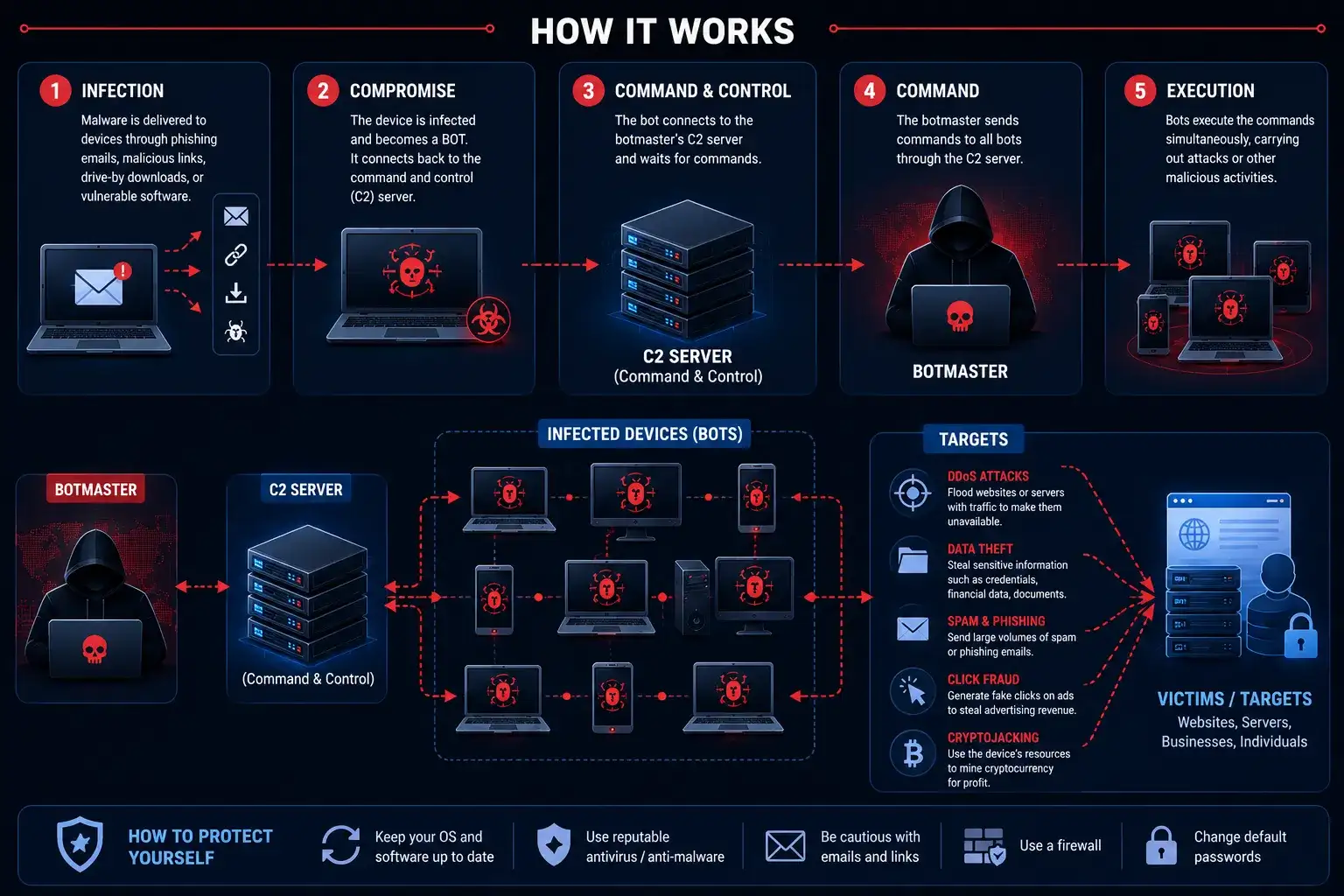
僵尸网络(Botnet)是由一组遭到入侵的计算机或设备组成的网络,这些设备运行恶意软件,使单一操作者能够远程控制所有设备。 每一台被感染的设备都称为一个“Bot”,控制这些设备的人通常称为“Bot Herder”,而用于发送指令的通信渠道则称为命令与控制(Command and Control,C2)。这些设备共同组成一个分布式平台,可以按照操作者的意图针对任何目标发起活动。人们通常从攻击目标的角度理解僵尸网络,例如网站被攻击至离线、账户资金被盗,或邮箱被大量垃圾邮件淹没。但每一个僵尸网络事件中,其实还存在第二类受害者,而这正是本文重点关注的对象:那些其地址空间中运行着僵尸网络节点的网络运营商。当您 IP 地址上的设备遭到入侵时,攻击者利用的不只是别人的计算资源,他们同时也在消耗您的 IP 地址信誉。垃圾邮件、扫描流量以及攻击流量都会从您的地址发出,被归因到您的地址,并因此产生封锁名单记录和滥用报告。即使设备上的恶意软件后来已经被清除,这些负面记录仍可能继续跟随您的 IP 地址。正是这种不对称性,使得僵尸网络不仅仅是安全团队需要关注的问题,任何负责管理公共 IPv4 地址空间的人都应该了解它。本文将介绍什么是僵尸网络以及它如何运作,为什么僵尸网络会在整个地址范围层面损害 IP 地址信誉,而不仅仅影响单个地址;为什么僵尸网络流量特别难以准确归因;如何识别自己地址空间中已经遭到入侵的主机;以及当相关地址空间属于租赁 IPv4 时,地址持有方与实际使用方之间的责任应如何划分。 什么是僵尸网络 僵尸网络(Botnet)是由一组连接互联网并感染恶意软件的设备组成的网络,这些设备因此受到同一个操作者的协调远程控制。 从设备所有者的角度来看,这些设备通常仍然能够正常运行,而这恰恰是恶意软件设计的目标——如果一个 Read more
网络滥用(Network Abuse)是指利用 IP 地址空间进行有害活动,例如垃圾邮件、网络钓鱼、恶意软件分发、暴力破解攻击、扫描,或参与其他攻击行为;而 Abuse Reports 则是在这些情况发生时,发送给该地址空间责任方的通知。 这些报告会发送到该地址块注册的 abuse contact,因此无论实际流量是谁产生的,只要您持有或管理这段地址空间,报告最终都会发送到您这里。 最后这一点,正是为什么滥用处理属于基础设施责任,而不仅仅是支持团队的日常工作。报告并不会发送给真正造成问题的人,而是发送给注册管理机构记录中对这些地址负责的一方。如果客户的服务器遭到入侵、承租方滥用地址空间,或者有人伪造您的地址用于其流量,投诉仍然会发送到已注册的 abuse contact。这个联系人响应得有多快、处理得有多好,将直接决定事件是否到此结束,还是进一步升级为被加入封锁名单、遭到上游网络过滤,以及造成长期的地址信誉损害。 本文将说明哪些行为属于网络滥用、滥用报告系统如何运作、为什么一个有效可用的 abuse contact 比大多数运营商想象中更重要、应该如何正确处理滥用报告,以及——对于租赁的地址空间——地址持有方与实际使用方之间的责任究竟如何划分。本文面向的是收到有关自身地址空间滥用报告的一方,而不是用于说明如何举报他人的网络滥用行为。 什么是网络滥用? 网络滥用(Network Abuse)是指利用互联网资源,例如 Read more